In brief
Work back from the first day of school. For an April session, lock the crest artwork and label set by mid-January, approve a sample on the uniform fabric by the end of January, place the bulk order for crest, size and care labels in early February so it reaches the vendor by mid-February, and order name and number labels when the admission list closes in early March. June-session schools shift every date by eight to ten weeks. Allow six to eight weeks from artwork to labelled garment, and order 5 to 8 percent spare.
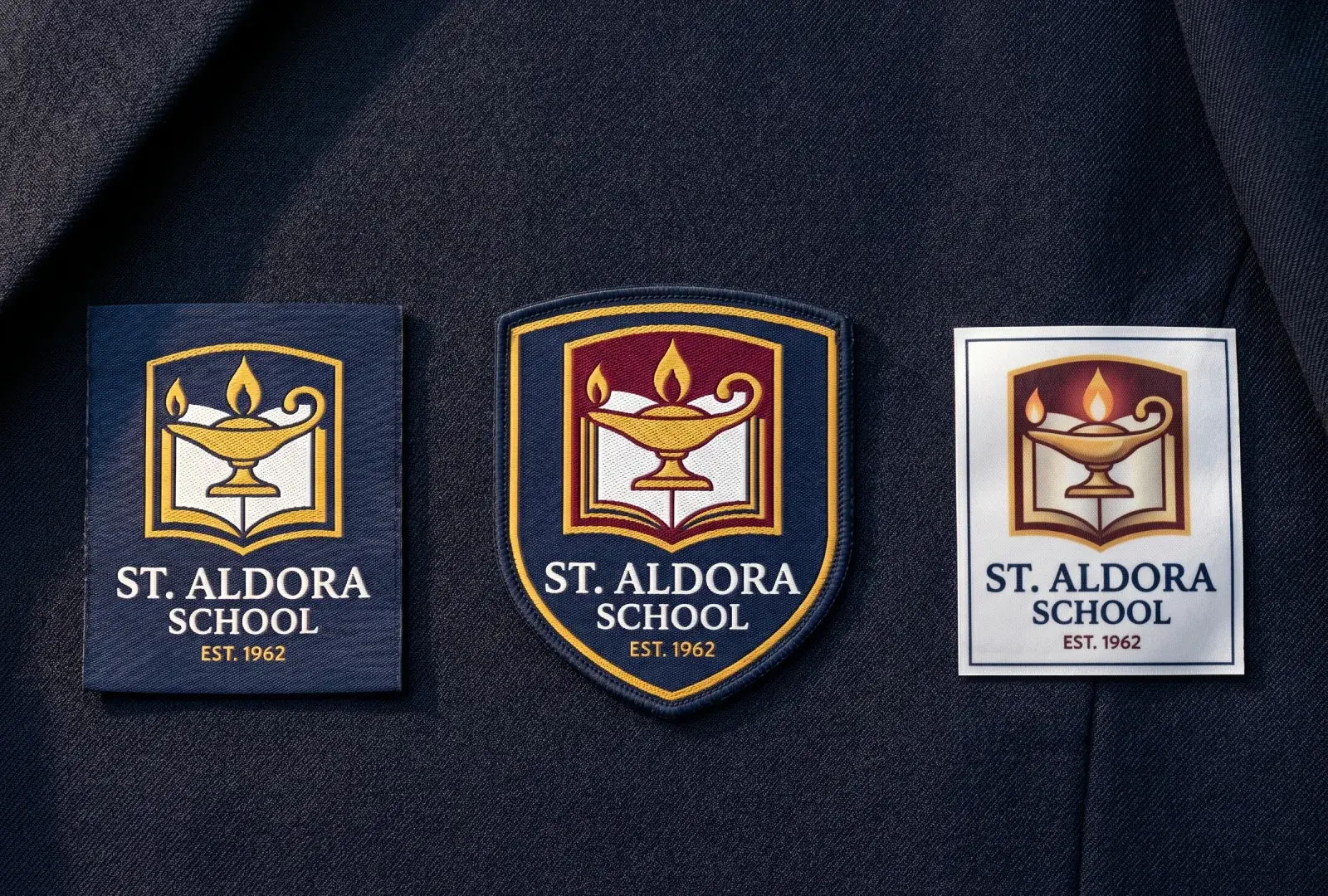
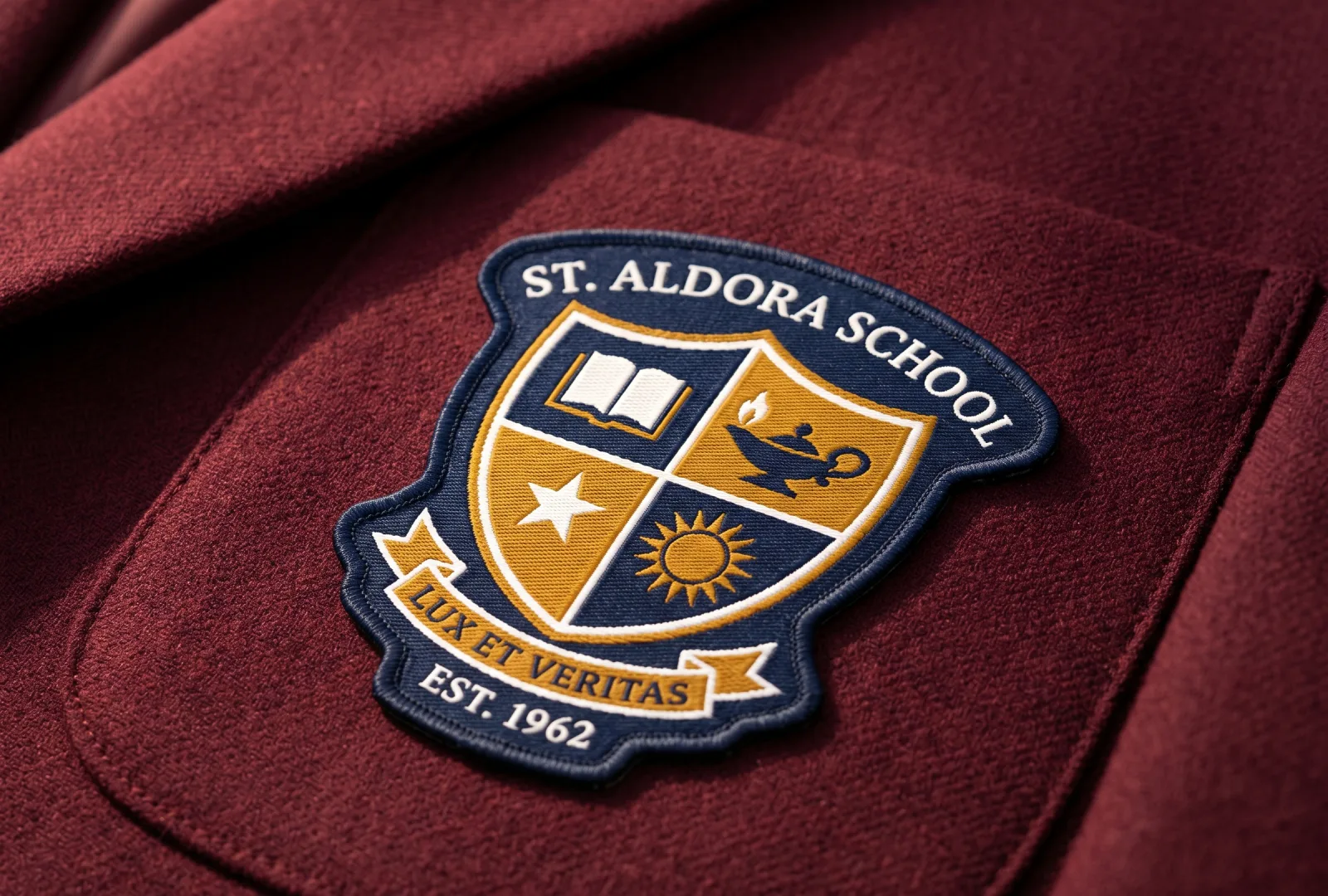
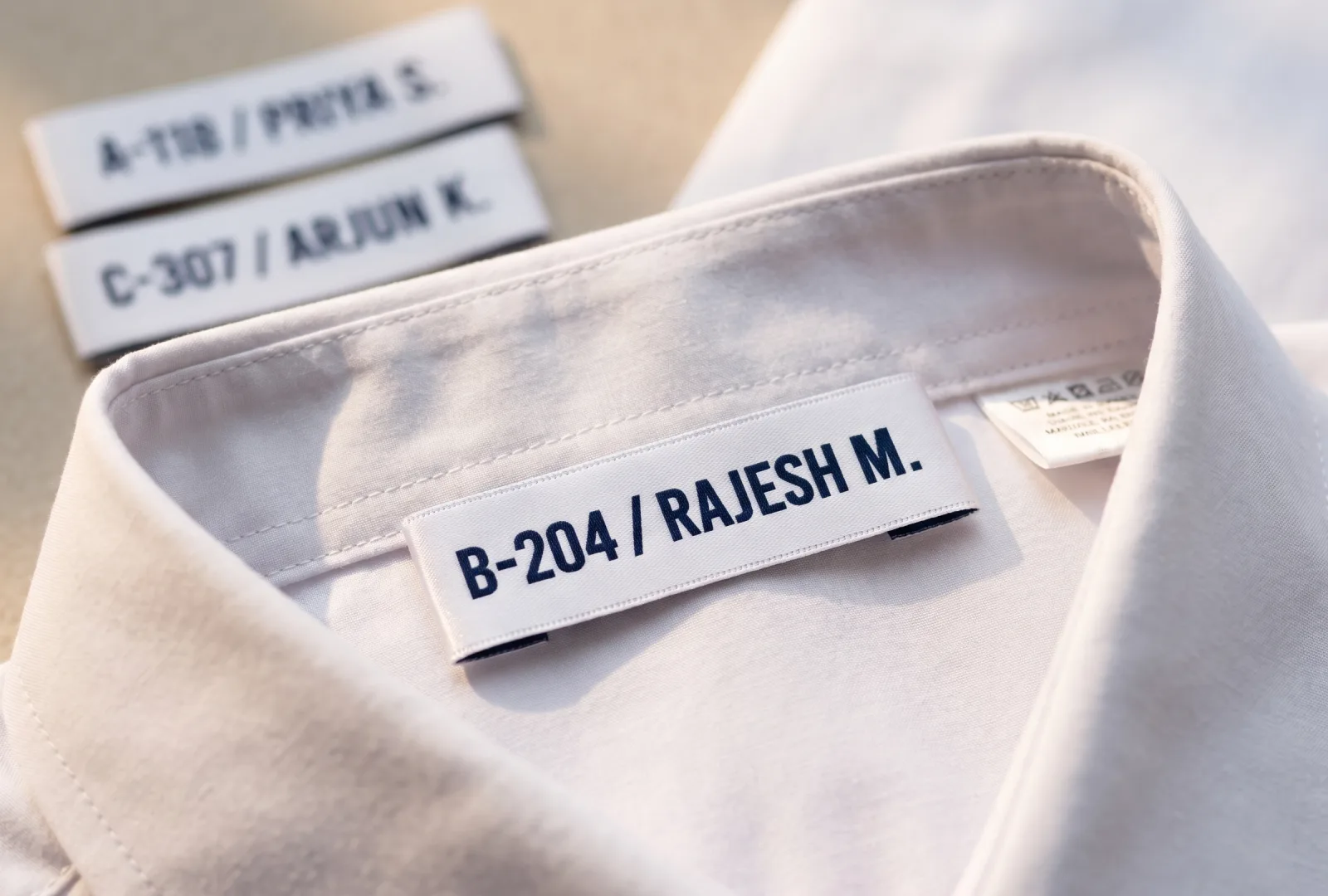
School labels are a scheduling problem, not a product problem. The products themselves are settled: a woven crest or an embroidered patch for the blazer, a size tab and a care label in every garment, and a name or number label so the uniform comes home from the laundry. Our guides on choosing the crest and ordering school labels online cover what to buy. What goes wrong is the when: the crest is ordered after the vendor has started stitching, or the name labels are ordered before the admission list is final and half of them are wasted.
The fix is to separate the labels that depend on enrolment from the ones that do not, and to give each its own date. The timeline below is written for a session starting on 1 April, which is the CBSE, ICSE and private-school calendar across most of India and, from 2026-27, the calendar some state boards are moving to. A second table shifts it for the June reopening that most state-board schools in the south and west still follow.
Two kinds of label, two kinds of date
| Label | Depends on | Can be ordered |
|---|---|---|
| Woven crest or embroidered patch | The school's artwork, which does not change | Any time; years ahead |
| Size tabs | Enrolment estimate and size split | January, from last year's issue records |
| Care labels | The uniform fabric | January, once the vendor confirms the fabric |
| House colour tabs, belt and tie labels | Enrolment estimate per house | January |
| Name labels | The admission list | After admissions close, usually March |
| Number labels (roll or admission number) | The admission list, or a block of numbers reserved in advance | March, or January if numbers are pre-assigned |
The first four rows are 80 percent of the labels and can be ordered in January with confidence. The last two are the ones that cause the March panic, and the way to avoid it is to order them last and fast, not first and wrong. Number labels are the exception that lets a school move early: if the admission office assigns a block of numbers in advance, the labels can be made in January and matched to students later, which is the system hostels use. Our hostel name and number guide explains why numbers outlast names.
The backwards timeline for a 1 April start
| When | What happens | Who |
|---|---|---|
| By 15 December | Uniform vendor confirmed; written agreement on who orders which labels; enrolment estimate per class for the new session | School and vendor |
| By 15 January | Crest artwork locked as vector, Pantone or thread references confirmed; label set decided (crest, size, care, house, name); quantities worked out with 5 to 8 percent spare | School, vendor, label maker |
| 15 to 31 January | Sample crest and labels made and stitched onto the actual uniform fabric; approved after a wash | Label maker, vendor |
| 1 to 7 February | Bulk order placed for crest, size, care and house labels | Whoever owns the order |
| Mid-February | Labels delivered to the vendor (7-10 days production plus delivery) | Label maker |
| Mid-February to mid-March | Garments stitched with labels in; fitting camps and size confirmation | Vendor |
| By 7 March | Admission list closed; name and number labels ordered from the final list | School |
| By 20 March | Name labels delivered; attached by the vendor, the school or parents | Label maker, then vendor or parents |
| Last week of March | Uniform distribution; spare labels held by the school office | School, vendor |
| April to June | Mid-year admissions labelled from the spare stock; top-up order if spares run below 2 percent | School |
| September | Winter uniform labels ordered for November issue | School, knitwear vendor |
The whole chain from locked artwork to labelled garment is six to eight weeks, and the part the label maker controls is about two of them. The other four to six are the sample, the vendor's stitching and the fitting camps, and they are where a late start actually bites. Our guide to label lead times breaks down each step; rush production in 3-5 days exists and we use it every March, but it cannot shorten the vendor's stitching.
The same timeline for a June reopening
Most state-board schools in Tamil Nadu, Telangana, Karnataka, Gujarat and Kerala reopen in the first half of June after the summer break, and uniforms are issued in late May or the first week of school. Shift every date by eight to ten weeks:
| Step | April session | June session |
|---|---|---|
| Vendor and label ownership agreed | Mid-December | Mid-February |
| Artwork and label set locked | Mid-January | Mid-March |
| Sample approved on uniform fabric | End of January | End of March |
| Bulk crest, size and care labels ordered | First week of February | Mid-April |
| Labels at the vendor | Mid-February | End of April |
| Name labels ordered from final list | First week of March | Mid-May |
| Distribution | Last week of March | First week of June |
Calendars are moving. Maharashtra has announced an April start for state-board schools from 2026-27, Goa runs April for the upper classes and June for primary, Uttar Pradesh opens the session in April on paper but reopens schools in July, and Chhattisgarh plans an April cycle from 2027-28. A vendor supplying schools across boards should ask each school for its distribution date rather than assume, and run the two timelines side by side.
Quantities: how many labels per student
Quantities are the enrolment estimate multiplied by the labels per student, plus a spare. The labels per student depend on how many garments carry each one.
| Garment | Crest | Size tab | Care label | Name label |
|---|---|---|---|---|
| Blazer or sweater (1) | 1 | 1 | 1 | 1 |
| Shirts (3 to 4) | 0, or 1 each if the pocket carries a crest | 1 each | 1 each | 1 each |
| Trousers, skirts or pinafores (2) | 0 | 1 each | 1 each | 1 each |
| PT shirt and shorts (1 set) | 1 on the shirt | 2 | 2 | 2 |
| Tie, belt (1 each) | Woven logo on the belt or tie | 0 | 0 | 1 each |
| Bag, bottle, lunch box | 0 | 0 | 0 | 1 each, iron-on or sticker |
| Per student | 2 to 6 | 8 to 10 | 8 to 10 | 10 to 14 |
- Spare: add 5 to 8 percent to every line for mid-year admissions, replacement garments and the labels lost in stitching. Hold the spare at the school office, not at the vendor, so a June admission can be labelled the same day.
- Multi-year crest: the crest artwork does not change, so ordering two or three years of crests in one run uses the 1,000-piece minimum per design well and brings the rate down. Store them flat and dry; woven labels keep for years.
- Stock size and care labels: a school below a few hundred students rarely reaches the minimum on size tabs per size. Stock size and care labels alongside a custom crest are the usual answer; our stock label guide explains what is available, and the MOQ guide how minimums are built.
The size split, from last year's records
The most common quantity mistake is ordering size tabs equally across sizes. Enrolment is not flat: a school with 120 students per class has more size 30 shirts than size 22 or 42, and the split shifts up one size per class per year as children grow. The method that works:
- Get the sizes actually issued last year per class from the vendor's records.
- Move each class up one size for the coming year.
- Add the new intake at the smallest sizes for the entry class.
- Order size tabs in that distribution, with the spare weighted to the middle sizes, which run out first.
Put the size tab under the crest or in the side seam in a format the vendor and the fitting camp both read, usually the chest or waist measurement in inches alongside the age band. Our size label guide has the tab sizes for each code length.
Who orders what, and who attaches it
The December agreement between the school and the vendor should settle three things, because the label order fails when they are left vague:
- Who orders the crest, size and care labels. Usually the vendor, with the fabric, because they attach them during stitching and they know the fabric for the care text. A school that wants to control the crest quality can order it directly and consign it to the vendor; the artwork approval then sits with the school.
- Who orders the name labels. Usually the school, from the admission list, or parents through a school-approved link. A vendor cannot order them before the list exists, which is why they are the last item.
- Who attaches the name labels. Vendor stitching is cleanest but only works if the names arrive before the garments are finished. Sew-in or iron-on labels attached by parents need an instruction sheet; our guide to iron-on vs sew-in labels explains what survives a school laundry.
Whoever orders, keep one specification sheet: the crest artwork, the thread references, the sizes and folds, the care text and the name label format. A vendor change in a later year then changes the stitching, not the labels. Our guide to consistent reorders lists what to record.
Winter uniforms and the September order
Sweaters, blazers and jackets are usually issued in November, often from a different supplier than the summer uniform, and the crest for them is the item most often forgotten until the sweaters are already knitted. Order the winter crest patches in September, confirm which supplier is attaching them, and get the patches to that supplier before the garments reach finishing. Knitwear needs a softer label and a different attachment than a cotton shirt; our guide to labels for woollens and knitwear covers both, and the patch size guide the crest sizes that suit a sweater versus a blazer.
Mid-year joiners and the top-up order
Admissions continue through April, May and June, and transfers arrive all year. The spare stock covers the first few months if it was ordered. When it runs low:
- Reorder the crest from the same specification sheet so the batch matches; ask the label maker to check it against the retained sample.
- Order name labels for joiners in monthly batches rather than one at a time; a batch of 20 students is a normal small print run, and we turn those around in 3-5 days when the school is waiting.
- Keep the size tab spare weighted to the sizes that actually ran out, from the office's issue log.
School labels from Labelwala
We make woven crests, embroidered patches, size tabs, care labels and name and number labels in Ahmedabad, Gujarat, and we have been supplying schools and uniform vendors for 25 years. The March rush is a known event here, and the timeline above is what we ask schools to follow so they do not need it.
- Minimum order: 1,000 pieces per design; a multi-year crest order is the usual way to use it.
- Quotes: we usually reply within 2 hours on a working day.
- Production: 7-10 days once artwork is approved. Rush jobs run 3-5 days.
- Name labels: printed from your admission list in a spreadsheet, sorted by class and section, with iron-on or sew-in backing. See name and number labels.
- Delivery: to the school, the vendor or both, across India.
Send us the crest artwork, the enrolment estimate per class, the uniform fabric and the session start date, and we will send back a dated order plan with the quantities per label and the latest order date for each. Our school uniform label page and the school and corporate uniforms segment show the label types.
We are rated 5.0 on Google from 27 reviews. Ask for the crest sample stitched onto your actual blazer fabric, and wash it once before you approve it.
Common mistakes
- Ordering the crest in March for a 1 April session.
- Ordering name labels from the provisional admission list and reprinting a third of them.
- Size tabs in equal quantities across sizes.
- No written agreement on who orders what, so nobody does.
- Crest sample approved on paper, not on the blazer fabric.
- Spare stock held at the vendor, where the school cannot reach it in June.
- Winter crest patches remembered after the sweaters are knitted.
- A new vendor with no specification sheet, so the second year's crest does not match the first.
- Name labels arriving after the garments are finished, with no plan for who attaches them.
- Assuming every school in the vendor's portfolio starts on the same date.
Planning checklist
- Session start date and distribution date confirmed per school?
- Vendor appointed and label ownership agreed in writing by mid-December (mid-February for June)?
- Crest artwork as vector with thread or Pantone references by mid-January?
- Enrolment estimate per class, and last year's issued sizes per class, in hand?
- Label set decided: crest, size, care, house, name or number?
- Sample stitched on the actual fabric and washed before approval?
- Bulk crest, size and care labels ordered by the first week of February?
- Name labels ordered within a week of the admission list closing?
- 5 to 8 percent spare on every line, held at the school office?
- Specification sheet filed, and the September winter order in the diary?
What we would recommend
Treat the crest, size and care labels as a January job and the name labels as a March job, and never let the two wait for each other. Lock the artwork by 15 January, approve a washed sample by 31 January, order bulk by 7 February, order names within a week of the list closing, and hold the spare at the school. For a June session, add eight to ten weeks to each date. Order the crest for two or three years at once, keep one specification sheet, and put the September winter order in the diary now.
A school that runs this calendar once never calls in the last week of March again, and the uniform vendor gets the labels before the stitching starts instead of after it.