In brief
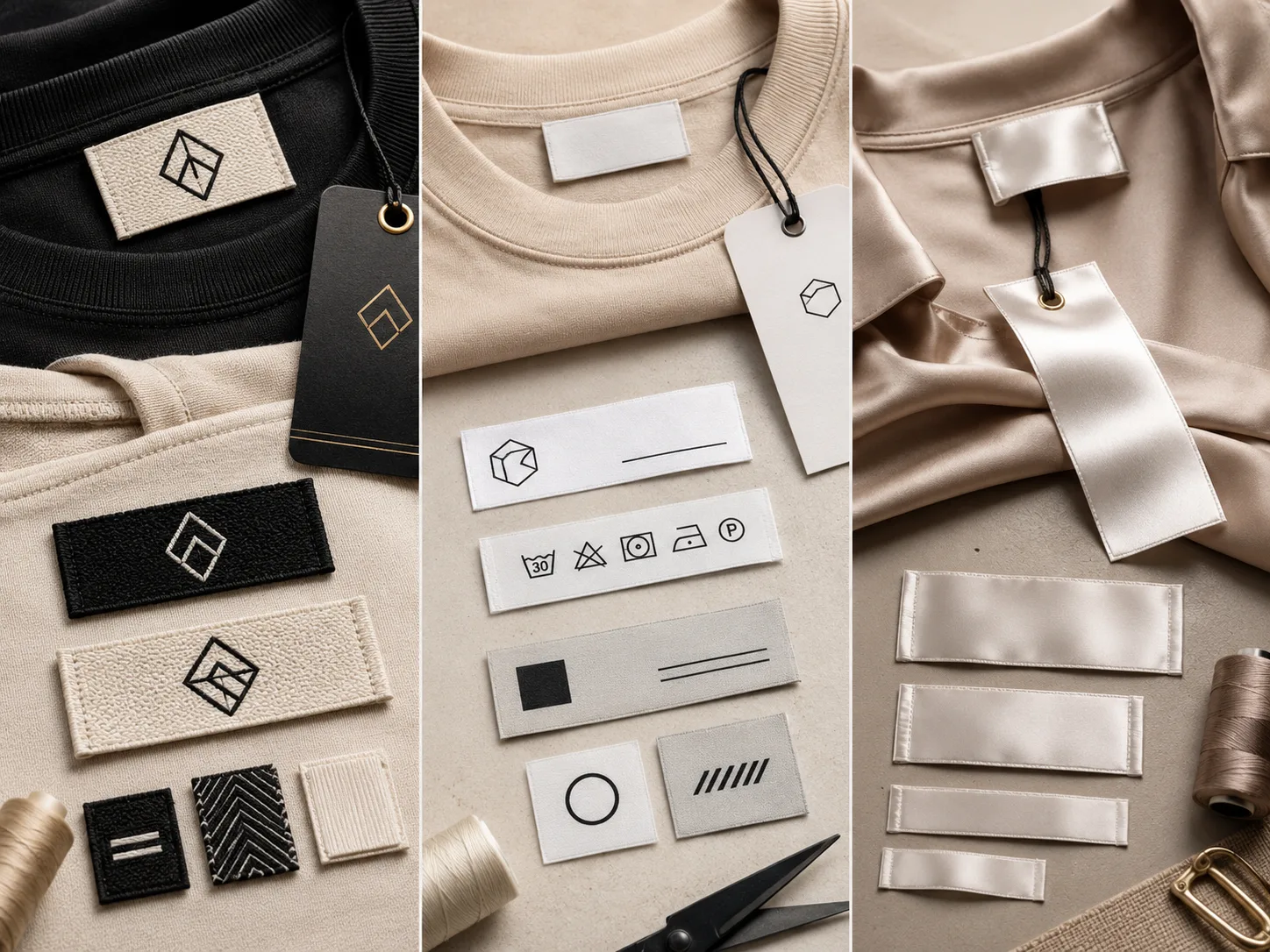
A woven label weaves up to 8 thread colours into a textured brand label, a satin label is printed on glossy ribbon for a soft full-colour look, and printed taffeta holds small care text sharpest at the lowest cost. Most brands use two: woven or satin at the neck and printed taffeta for the care label.
You've designed the garments, picked a name, maybe even got a logo. Then your label supplier asks one deceptively simple question: woven, printed or satin? For a first-time clothing-brand founder this is the moment things get confusing, three options, three prices, and no obvious "best." This guide settles it in plain English.
Here's the short version: woven and satin are about how your brand feels; printed is about how much information you can fit cheaply. Most brands end up using two of the three. Below, we break down each one, show the real cost difference, and give you a 30-second rule to decide.
How do the three label types differ at a glance?
The decision hinges on three questions: do you want a premium feel, how much small text do you need, and what's your budget per piece. Get those three right and the label type picks itself.
Skip the artwork back-and-forth. Design your label in the free label designer and send the design and spec to our studio for a quote in one step.
Type 1, Woven labels
A woven label is made the way fabric is made: coloured threads woven together on a loom to form your logo and text. Nothing is printed; the design is the weave. This gives a premium, slightly raised, textured finish that feels expensive and lasts the life of the garment.
- How it's made: damask or taffeta weave on a loom, design built from coloured threads
- Colour range: typically up to 8 thread colours; solid blocks, not gradients
- Feel: textured, structured, premium; damask weave is softest
- Best for: denim, ethnic wear, premium fashion, jackets, the visible brand label
- Cost: ₹1.20-3 per piece at 1,000+ pieces (highest of the three)
To go deeper on woven specifically, compare woven vs printed labels and damask vs satin.
Type 2, Satin labels (printed)
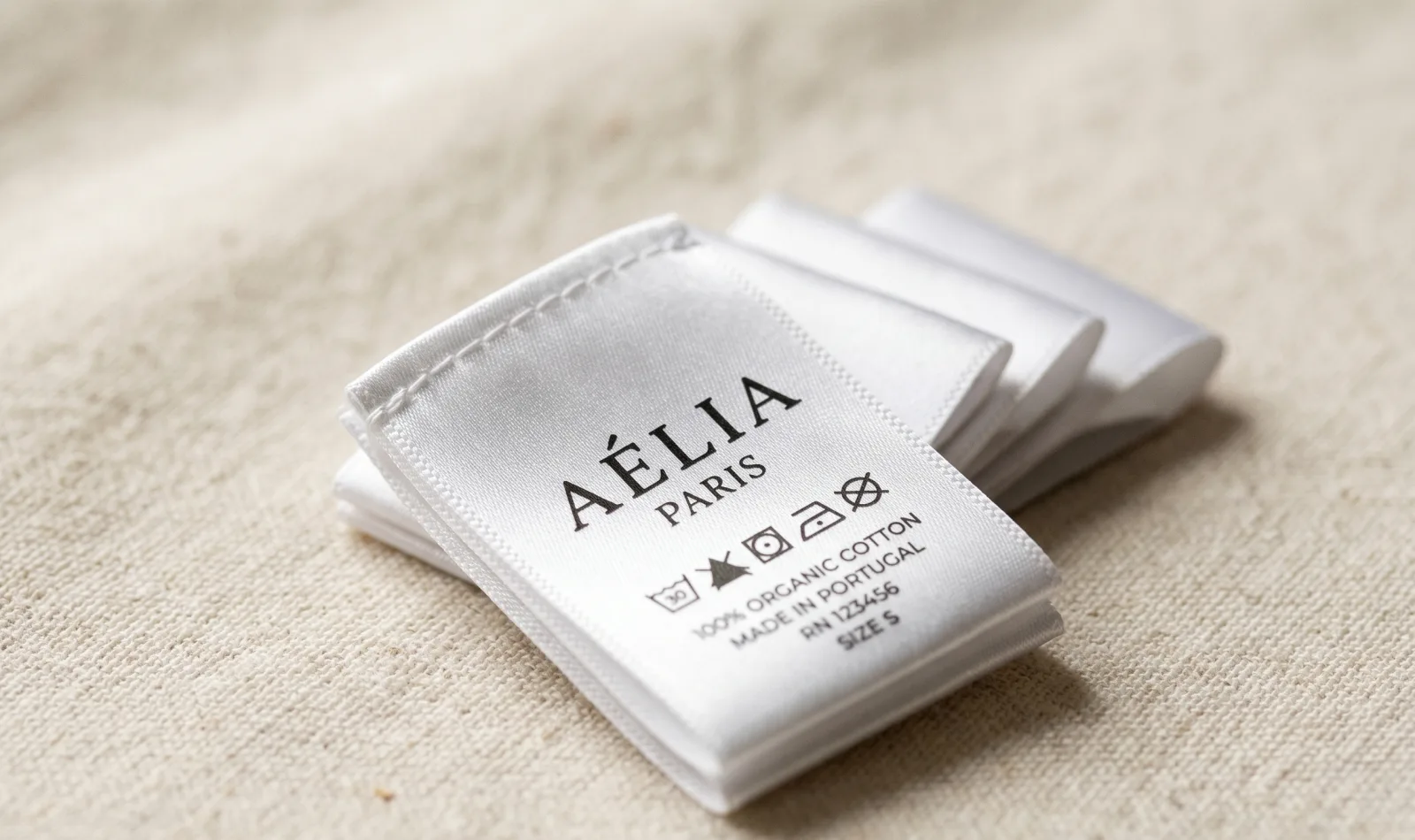
A satin label is technically a printed label, but on a smooth, glossy satin ribbon. The result is soft against skin, takes full-colour artwork beautifully, and looks premium without the cost of weaving. It's the most popular brand label for Indian D2C and kidswear.
- How it's made: dye-sublimation print onto 100% polyester satin ribbon, 25-35 gsm
- Colour range: full CMYK, gradients and photographic detail
- Feel: smooth glossy face, soft against skin
- Best for: kidswear, casual D2C, boutique fashion, soft brand & care labels
- Cost: ₹0.80-2 per piece at 1,000+ pieces (middle of the three)
For more, see our satin printed labels buyer's guide and satin vs woven.
Type 3, Printed (taffeta) labels
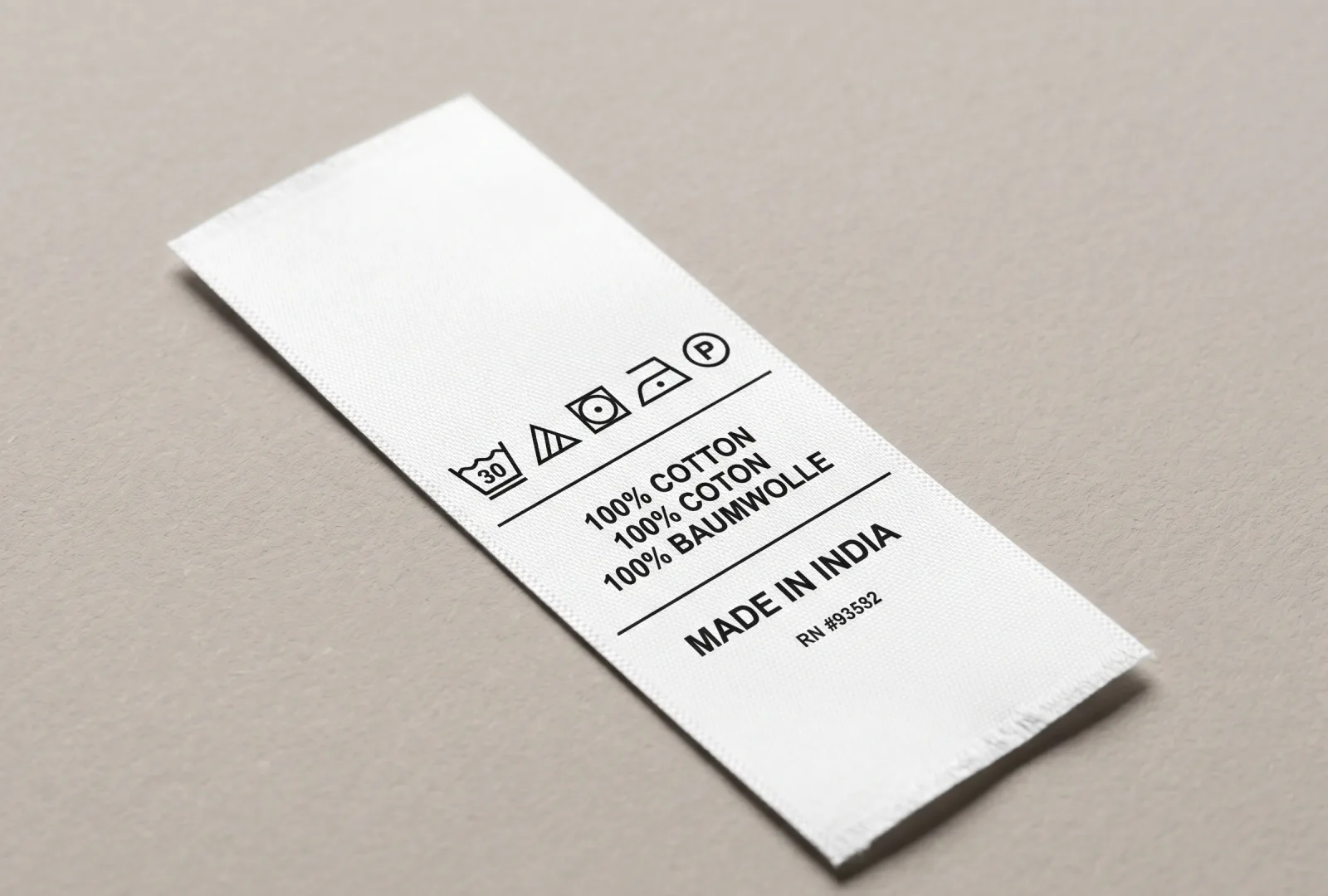
When people say just "printed label," they usually mean a taffeta printed label: a tighter, matte ribbon that holds tiny text and wash symbols razor-sharp. It's the cheapest option and the industry standard for care and content labels because it fits a lot of small information legibly.
- How it's made: dye-sublimation print onto nylon/polyester taffeta, 30-50 gsm
- Colour range: full CMYK; sharper small text than satin
- Feel: matte, slightly papery, stiffer than satin
- Best for: care & content labels, multilingual wash info, size tabs, export garments
- Cost: ₹0.40-1 per piece at 1,000+ pieces (cheapest of the three)
For the export angle, see taffeta labels for garment exporters.
Head-to-head, feature comparison
- Most premium feel and look
- Textured, threaded, no fade
- Best for logo-only brand labels
- Highest cost per piece
- Weak at tiny text & gradients
- Softest, full-colour brand label
- Premium glossy finish
- Great for photographic logos
- Mid-tier price
- Less crisp on micro-text than taffeta
- Sharpest text & wash symbols
- ISO 3758 export-grade
- Lowest cost at every volume
- Best for care & content labels
- Stiffer, less premium at the neck
How much does each of the three label types cost?
Representative pricing for a 25 × 40 mm neck/brand label, 2026:
Read the curve: printed taffeta is cheapest at every volume, woven is dearest, satin sits in the middle. The gap narrows at higher quantities. At 10,000 pieces a woven label is only about twice a printed one. Want exact numbers for your size and colours? Use our price calculator.
Which label type suits which kind of brand?
- Premium / denim / streetwear brands
- Ethnic & occasion wear
- Logo-only neck labels
- Brands selling on "quality feel"
- Kidswear & babywear (soft)
- Colourful / photographic logos
- Casual D2C & boutique fashion
- Premium look at lower cost
- Care & content (wash) labels
- Multilingual / export info
- Size tabs & tight budgets
- Uniforms & institutional wear
- Woven → if your logo needs gradients or tiny text
- Satin → if you need export-sharp ISO symbols
- Printed → if it's a luxury neck label (feels papery)
Which setup do most brands actually use?
Here's the secret first-time founders rarely hear: you don't pick one. The smartest setups assign each label to the job it does best:
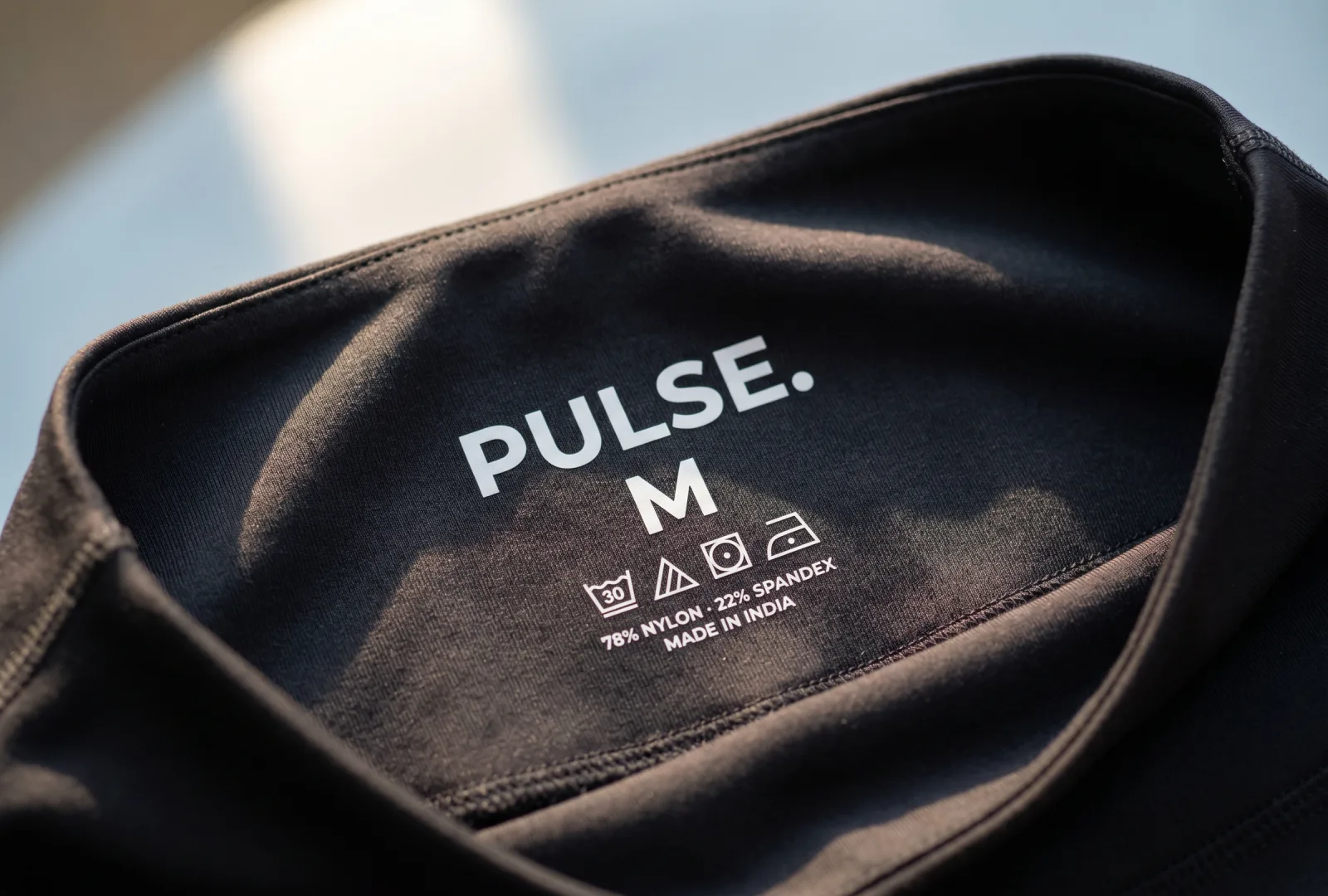
- Neck brand label: woven (premium) or satin (soft, colourful), your brand's "face"
- Side-seam care label: printed taffeta, sharp wash symbols, fibre content, country of origin
- Size tab: printed taffeta (cheapest) or a small woven tab
This two-label split covers branding and legal care information, and usually costs about the same as forcing a single label type to do both jobs badly.
Decision matrix, 30-second pick
Yes → woven for premium feel, or satin for a soft colourful logo. Both read as "branded."
Printed taffeta. It holds dense, multilingual information sharper than woven or satin.
Satin (or a tagless heat-press print). Avoid stiff taffeta directly against the neck.
Start with a satin brand label + printed care label. Upgrade the brand label to woven once volumes grow.
Pro tips before you order
Order all three as samples first. A woven, satin and printed swatch each cost only ₹250-400 to sample. Hold them, wash one, and feel the difference before you commit thousands of pieces.
Don't put your full care information on a woven label. Tiny wash symbols and long fibre-content text lose legibility in a weave. Keep woven for the logo and print the care details on taffeta.
Quick start: send us your logo and garment type. We'll mock up woven, satin and printed versions with per-piece prices at 100 / 500 / 1,000 pieces. Message Labelwala or use the quote form.
Why do most garments need two of the three?
Presented as a three-way choice, this looks like a decision to make once. In practice a garment carries more than one label and the positions have different requirements, so the useful question is which type goes where.
- The brand label at the neck is felt as much as seen, so it comes down to woven for substance and detail or satin for softness. Which one depends on the fabric and whether the label is ever handled.
- The care label carries composition, symbols and origin, and that volume of small text will not weave legibly at care-label size. It is printed, effectively always, and that is a legibility decision rather than a cost one.
- The size belongs on its own tab once you sell several sizes, so the expensive brand label stays identical across the range and only the cheap piece changes.
- Visible external branding, on a hem or a sleeve, is woven. It reads as deliberate in a way a printed tag does not.
Set out that way the comparison mostly dissolves, and the remaining question is narrow: woven or satin for the brand label. Everything else has an answer that does not depend on brand tier at all.
How do you make three label quotes comparable?
Comparing types usually means comparing quotes, and most of the confusion in that exercise comes from the quotes describing different things rather than from the prices themselves.
Send the same five items to every supplier: the artwork, the finished size, the fold, the quantity and where the label sits on the garment. Then check the replies for the two places quotes diverge without saying so.
- Flat size or finished size. On a folded label these are very different, and a quote against the flat size looks cheaper for no reason.
- Whether sampling, packing and freight are inside the number.
- Density, on woven quotes. Two woven prices are often two thread counts, and the cheaper one loses detail exactly where your logo needs it.
- Colour count. Confirm the quote assumes the same number of colours you intend to use, because it is the largest controllable line.
Then ask each supplier for a sample of your own artwork and compare those before comparing prices. A sample card is chosen to flatter the process; how a supplier handles your mark at your size is what you are buying.
Common mistakes
- Treating this as one decision when a garment carries several labels.
- Trying to weave care and composition text at care-label size.
- Choosing woven for prestige on a garment where the label will only ever be felt.
- Comparing quotes built on different size conventions.
- Putting the size on the brand label, which multiplies the number of designs.
- Approving any of the three from a screen, when hand and finish are the whole difference.
- Switching type mid-range and approving the two versions separately.
Ordering any of the three from Labelwala
Labelwala has been making woven and printed labels in Ahmedabad, Gujarat, for 25 years.
- Minimum order: 1,000 pieces per design.
- Production: 7-10 days once artwork is approved. Rush jobs run 3-5 days.
- Care symbols: drawn to ISO 3758.
Tell us the garment, the fabric and where each label sits, and we will say which type suits which position before anything is quoted. A garment usually needs two of the three, so it is worth quoting them together rather than deciding one at a time.
We are rated 5.0 on Google from 27 reviews.
The short answer
Use woven when you want the most premium, textured brand label and your logo is mostly solid shapes. Use satin when you want a soft, colourful, premium-looking brand label at lower cost, ideal for kidswear and casual D2C. Use printed taffeta for care, content and size labels where sharp small text and low cost matter most. Most successful brands pair a woven or satin brand label with a printed care label, and that combination is almost always the right first order.