In brief
Choose satin printed labels when your design has gradients, photographic detail or more than eight colours and you want a soft feel against skin; choose woven satin for a one to eight colour logo with heritage positioning. Sublimation-printed satin survives 100 or more wash cycles, and 80% of brands order end fold for neck labels.
Soft hand-feel, vibrant colour, durable through hundreds of washes. Satin printed labels are the workhorse of D2C, boutique and contemporary apparel. This guide explains when they're the right call and how to order them.
Satin printed labels are how most modern fashion brands get a premium look without the premium cost. Soft against skin, vibrant in colour, durable through hundreds of washes. They're the workhorse of D2C, boutique and contemporary apparel labels. This guide explains exactly when they're the right call, how we make them, and what to expect on price and lead time.
The 60-second answer
Pick satin printed labels when your design has gradients, photographic detail, or more than 8 colours, and you want a soft, premium feel against skin. Pick woven satin instead if your design is a 1-8 colour logo and your positioning is heritage / luxury. Everything below is the long-form reasoning.
What exactly is a satin printed label?
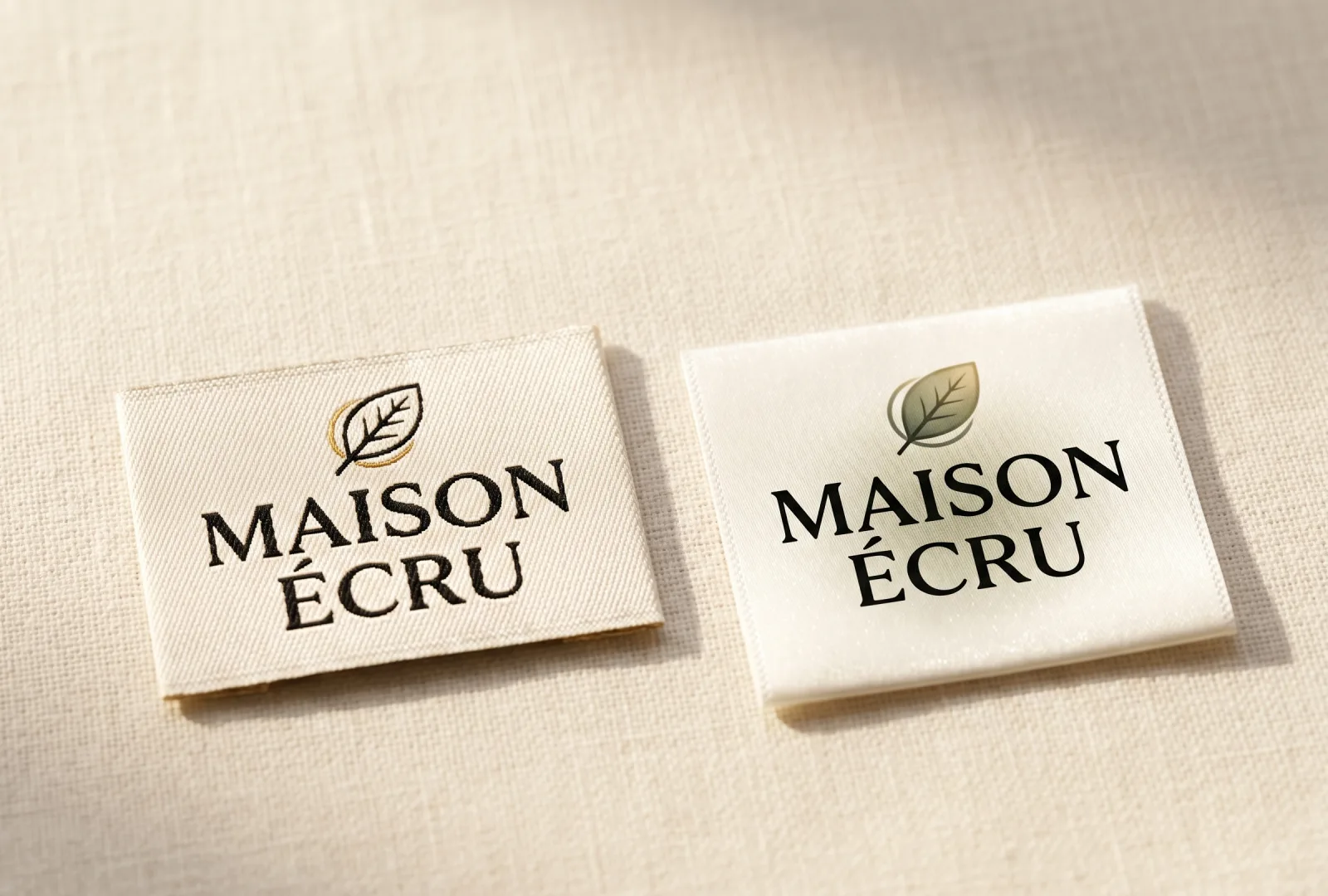
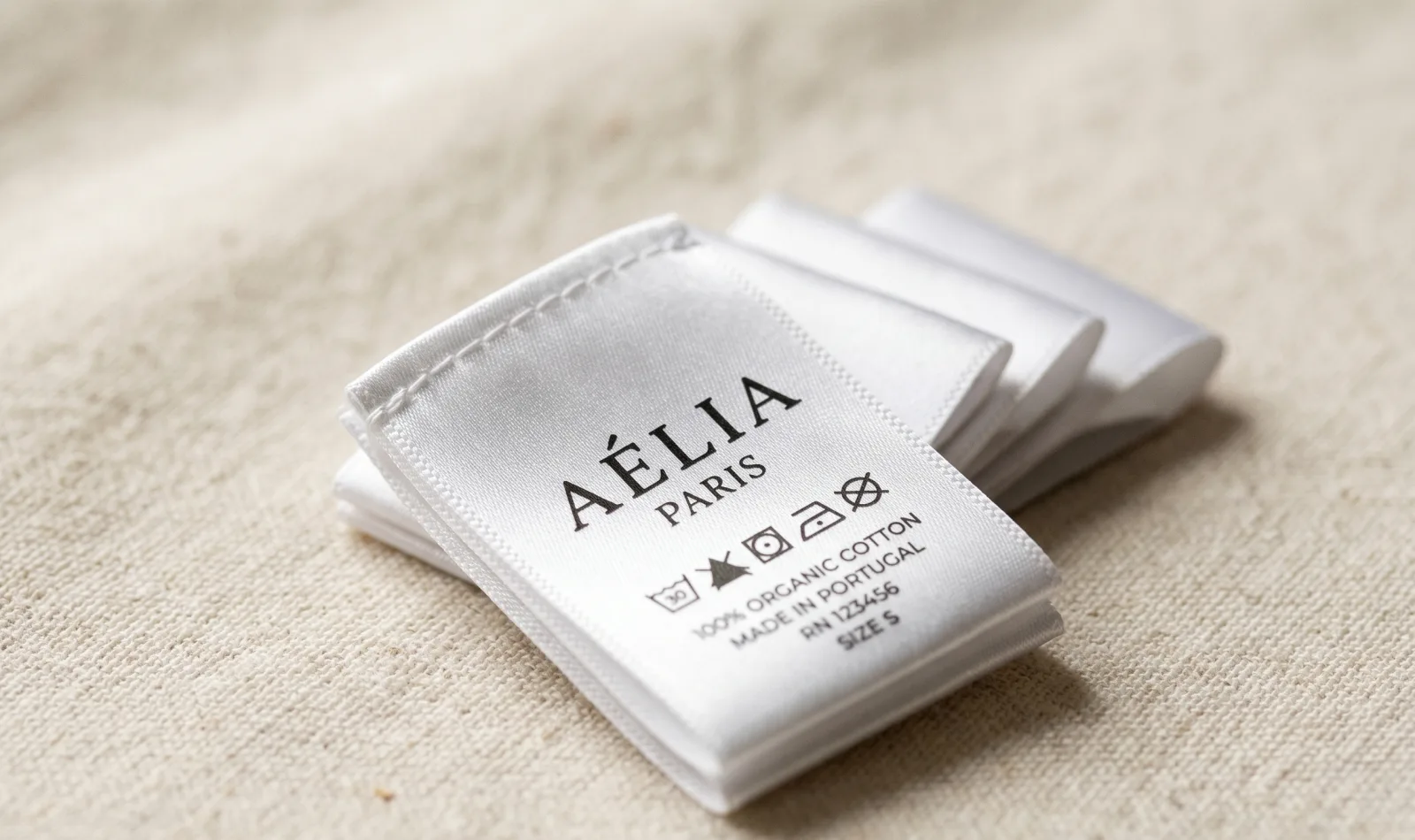
It starts with a polyester satin ribbon: a tightly woven base with a smooth, slightly lustrous finish. Your design is then printed onto it using one of three methods (we'll cover those below). The combination matters: satin's smoothness gives the print room to render fine detail, and its sheen amplifies colour saturation. Cotton or taffeta bases give a flatter, more matte print; satin is what reads as "premium" at retail.
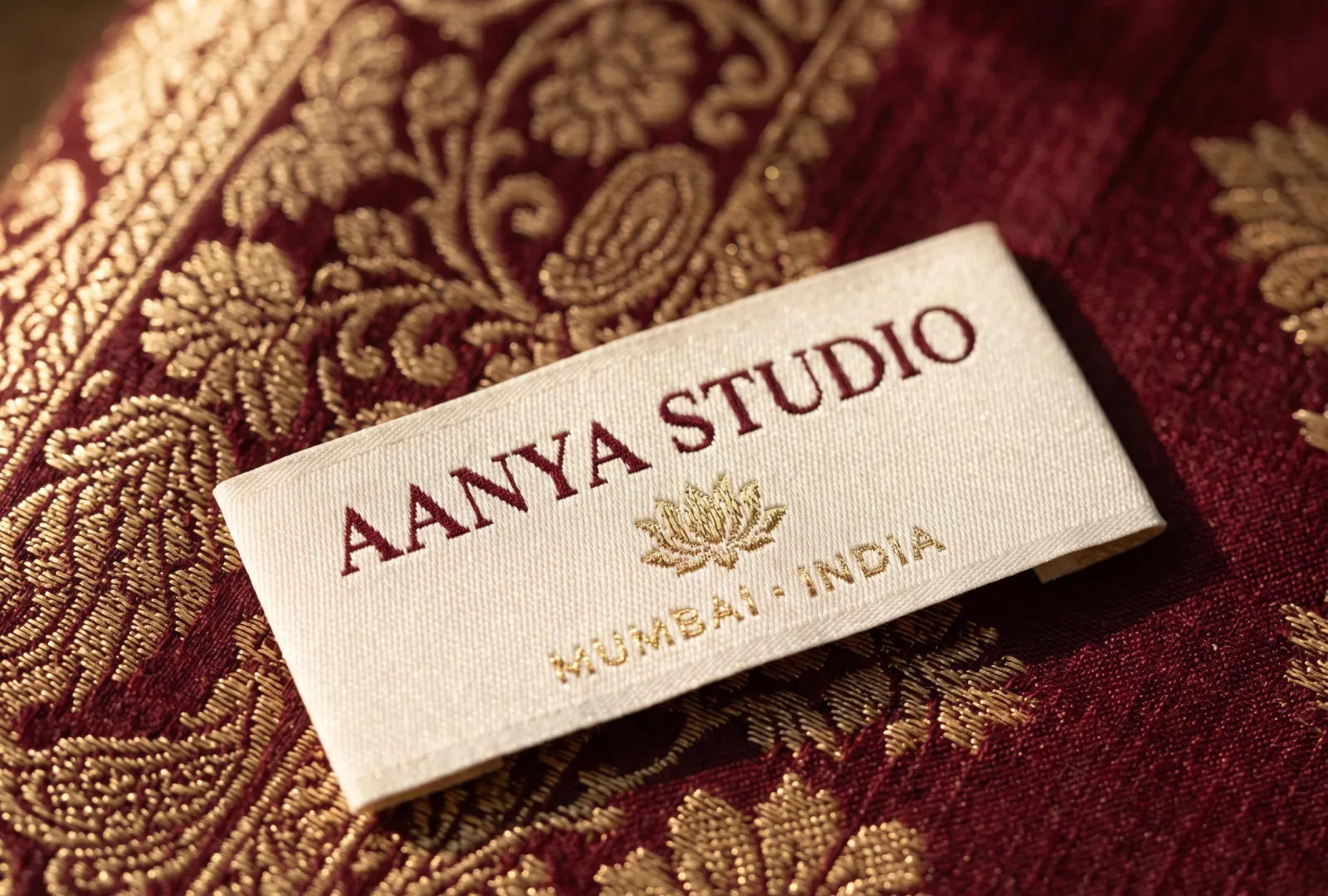
Don't confuse this with woven satin labels: those weave the design directly into the satin using coloured yarn. Both feel similar; only printed satin can do gradients and photo-quality detail.
Which print methods are used on satin?
- Dye sublimation, the default. Heat-fuses dye into polyester satin, won't peel or crack. Best for full-colour designs, gradients and photographic detail.
- Multi-colour screen print: flat solid colours, very crisp edges. Best for bold logos with 1-6 spot colours; slightly less expensive than sublimation at high volumes.
- Foil accents & metallic: gold, silver, copper foil stamped onto satin for accents. We add these on top of sublimation or screen prints for premium positioning.
Where does satin printed win, and where not?
- Your design has gradients, photo detail, or 8+ colours
- You want a soft, premium hand-feel against skin
- Your brand sits in D2C, boutique or contemporary fashion
- You're producing care labels or size tags where colour fidelity matters
- You need labels for industrial wash / hot bleach (use woven damask)
- Your garment is denim or coarse outerwear. Softness is wasted there
- You want a heritage luxury feel. Use woven jacquard
- You're ordering over 10,000 single-colour pieces. Woven is cheaper at scale
Fold styles, five options
The way a label is folded changes how it sits inside a garment and what shows from outside. We make all five at no premium:
- Straight cut: simplest, raw edges sealed by ultrasonic cut. Cheapest, fastest. Default for low-MOQ runs.
- End fold: both short ends folded back. Both sides stitched into the seam. Classic neck-label fold.
- Centre fold: folded in half lengthways, showing two-sided design. Loops are sewn into a hem; good for hem-tags.
- Mitre fold: diagonal corners folded to a clean front. Premium look for boutique neck labels.
- Loop fold: short ends fold inward, leaving a small loop on top. Used for size-tab folds inside garments.
Not sure which fold? 80% of brands order end fold for neck labels and straight cut for care labels. Send us a photo of your reference garment and we'll recommend.
How well do satin printed labels survive washing?
Sublimation-printed satin labels are essentially permanent for the life of the garment under normal wash conditions. Specifics:
If your customer washes hot with bleach (kids' uniforms, hotel linen), pick woven labels instead. For everything else (fashion, casual, sportswear, loungewear), sublimation-printed satin is the right call.
What do satin printed labels cost?
Per-piece pricing on satin printed labels in India varies by size and quantity. As a directional range for a 30mm × 50mm full-colour label:
- 100-500 pieces: ₹6-10 per piece (lowest possible MOQ tier)
- 500-2,000 pieces: ₹3-6 per piece
- 2,000-10,000 pieces: ₹1.50-3 per piece
- 10,000+ pieces: ₹0.80-1.50 per piece
Exact pricing depends on label size, fold style, foil accents and ink coverage. WhatsApp us your design and we'll send a per-piece + total quote within 2 hours.
What can sublimation not do?
Dye sublimation is the default here for good reason, but it has two hard limits that decide a surprising number of designs. Both come from how the process works: dye turns to gas and bonds into polyester fibre, so it colours the base instead of coating it.
It cannot print white. There is no white dye in sublimation, because white is the absence of colour. Anything white in your artwork is simply the satin showing through. That is fine on a white base and impossible on a coloured one, so a white logo on a navy label is not a sublimation job. The options are a coloured base with the design reversed out in the base colour, a screen print with an opaque white ink, or a woven label.
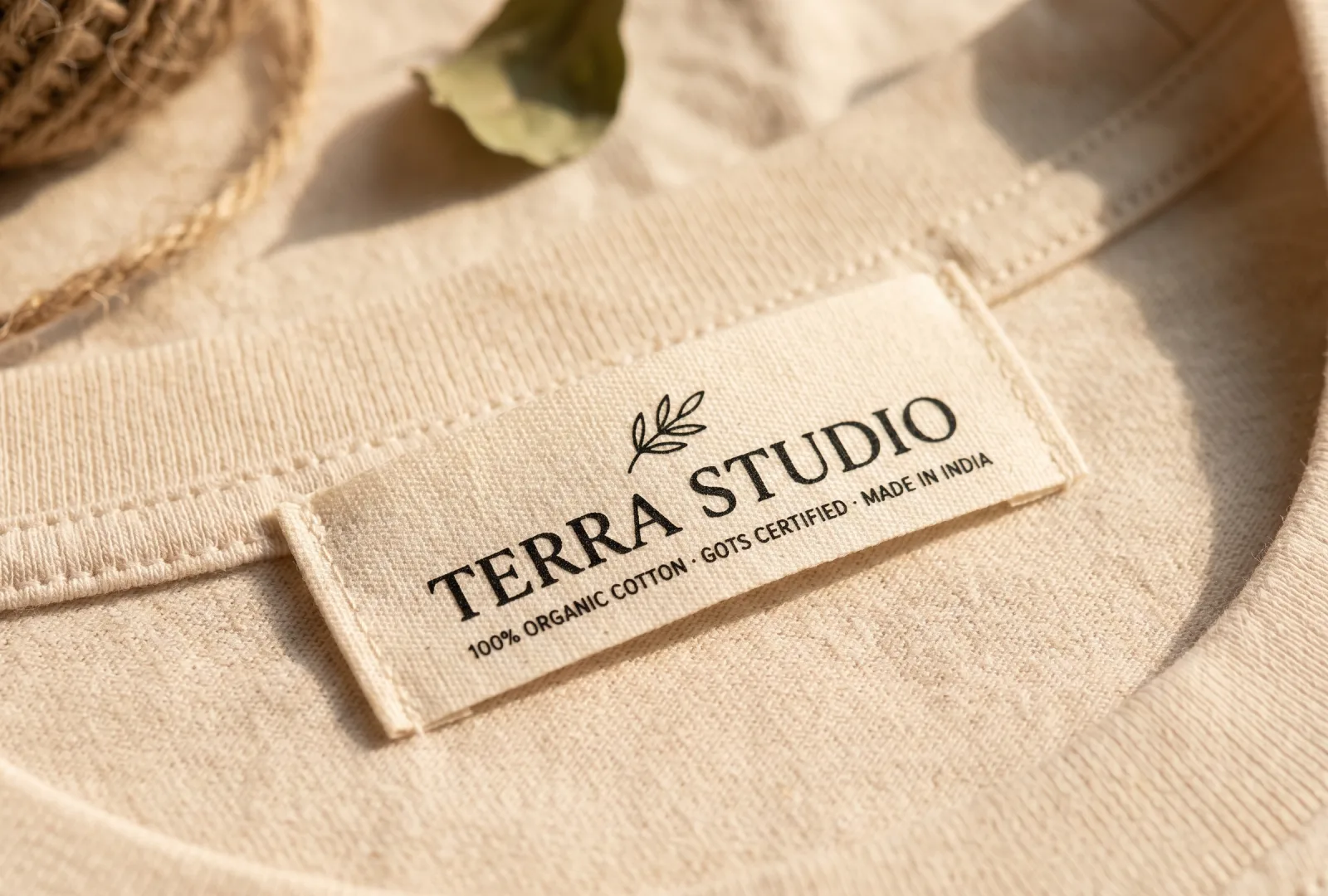
It only works on polyester. The dye needs polyester fibre to bond into. On cotton it sits on the surface and washes out. That is why satin printed labels are polyester satin, and why a brand wanting a natural-fibre label ends up with screen printing on cotton tape instead.
Two smaller constraints follow from the same chemistry. Colours on sublimation are slightly muted compared with a screen print, because the dye sits inside the fibre and the satin sheen sits on top of it. And a very dark base limits everything, since you can only ever go darker than the substrate.
If your logo contains white and your label is not white, say so at quote stage. It changes the print method, and it is the single most common reason a satin label has to be requoted after artwork arrives.
Why colour on satin looks different
Satin has a sheen, and sheen changes how the eye reads colour. The same ink on matte taffeta and on satin will not look the same, and the satin version will usually look richer and slightly darker. That is worth knowing before you sign off a colour, because it is a property of the material and not something a supplier can adjust away.
That has practical consequences when you are matching a brand colour:
- Give a Pantone reference and expect a close match, not an identical one. The substrate is part of the result.
- Approve colour on satin, not on paper. A printed swatch on paper is a different surface with different reflectance, so it tells you very little.
- View it in daylight, or at least always in the same light. Sheen exaggerates the difference between light sources.
- Judge it flat and folded. A folded label catches light on the curve, and a colour that reads well flat can look different along the fold.
- Record the ink recipe and keep it with your approved sample for reorders. Printed colour depends on a recipe that has to be written down, unlike woven colour which is fixed by a thread number.
If your label set mixes satin with a woven neck label, expect the two to differ slightly even on the same reference. Where that matters, approve them together as a pair instead of separately.
Edges and folds on satin
Satin is a synthetic, so it is heat or laser cut, and the cut seals as it goes. That seal is what stops the edge fraying, and it is also firmer than the cloth around it.
The consequence is the one most brands discover late: a straight-cut satin label can feel sharp at the neck even though satin is a soft material. The softness people associate with satin comes from the face, and the edge is a different thing entirely.
- Folded edges for anything at the neck. An end fold or centre fold replaces the sealed edge with a soft one.
- Straight cut is fine in a side seam or a pocket bag, where the edge is enclosed and nobody feels it.
- Mitre fold for fine or sheer garments, since it reduces bulk at the corners.
- Laser cut if you want a shaped label, which satin takes well.
Remember that a fold changes the size you have to order. A centre-fold satin label needs roughly double the visible height as flat material, so quote the finished size and name the fold. See our fold types guide for the allowances.
When is satin the wrong choice?
Satin is the default for contemporary apparel, and there are a few places it genuinely does not belong.
- Industrial laundry. Hotel linen, healthcare and hospitality wash with bleach at high temperature every day, and that regime needs a high-density woven label with bleach-stable dye.
- Heavy abrasion. A satin label on the outside of workwear or a bag wears through where woven would survive.
- Heritage and luxury positioning. Where the label is meant to read as crafted, woven damask carries a meaning printing does not.
- Natural-fibre stories. Polyester satin sits awkwardly inside an organic cotton range; printed cotton tape fits better.
- Next-to-skin activewear. Even a soft satin label is a physical object, and tagless printing is usually the better answer.
Everywhere else, satin printed is hard to beat on the combination of feel, colour range and cost.
Satin is forgiving in most respects, which is exactly why the few places it is not catch people out. Almost every problem on that list comes from treating the material as interchangeable with woven, when the print method, the sealed edge and the sheen all behave differently.
Common mistakes
- Designing a white logo for a coloured satin base and discovering sublimation cannot print white.
- Approving colour from a screen or a paper swatch instead of printed satin.
- Choosing a straight cut at the neck and getting a firm edge against skin.
- Quoting a flat size when a fold was intended, so the label arrives half the expected height.
- Specifying satin for hotel linen or anything going through industrial laundry.
- Pairing printed satin with a woven neck label and expecting the whites to match exactly.
- Not recording the ink recipe, so the reorder drifts.
Ordering satin labels at Labelwala
We have been weaving and printing labels in Ahmedabad, Gujarat, for 25 years.
- Minimum order: 1,000 pieces per design.
- Quotes: normally back inside 2 hours if you send the brief on a working day.
- Production: 7-10 days from artwork approval, or 3-5 days on a rush job.
- Delivery: anywhere in India; timing follows the destination and the size of the consignment.
Send the artwork, the finished size and the fold, and say whether any part of the design is white on a coloured ground. That last question decides the print method, so answering it early saves a requote.
We are rated 5.0 on Google from 27 reviews. Ask for a sample on satin before committing, because colour on this material is genuinely hard to judge from a screen.
How to order, start to finish
If you are unsure which base, finish or fold suits the garment, say what the garment is and where the label sits before working through the steps below. Those two answers narrow the options faster than taking each choice in turn, and they are the questions a supplier would ask first anyway.
Per-piece, total, delivered. We confirm fabric, fold, finish, MOQ.
To-scale colour-matched proof on WhatsApp. Physical sample available for 500+ orders.
7-10 day standard turnaround. Pan-India dispatch.
Founder tip: If you're launching a first capsule, order satin printed neck labels + printed care labels together. One supplier, one delivery, consistent quality, and you save on shipping. Start on WhatsApp.