In brief
A woven label's cut edge is stopped from fraying either by heat-sealing it, using an ultrasonic cutter for straight edges or a laser for shaped outlines, or by folding the raw edge under into the seam. Sealing works because the label is polyester, which melts rather than scorches, and a folded edge is the softer choice at the neck.
A woven label is a small rectangle cut from a long woven strip. The moment you cut fabric, you expose loose threads at the edge, and loose threads fray. Everything about "edge finish" is the answer to that one problem: how do we stop the cut edge unravelling?
There are two families of answers (seal the edge, or fold it away), and which you pick shapes how the label looks, feels and gets sewn in.
Why do cheap labels fail at the edge?
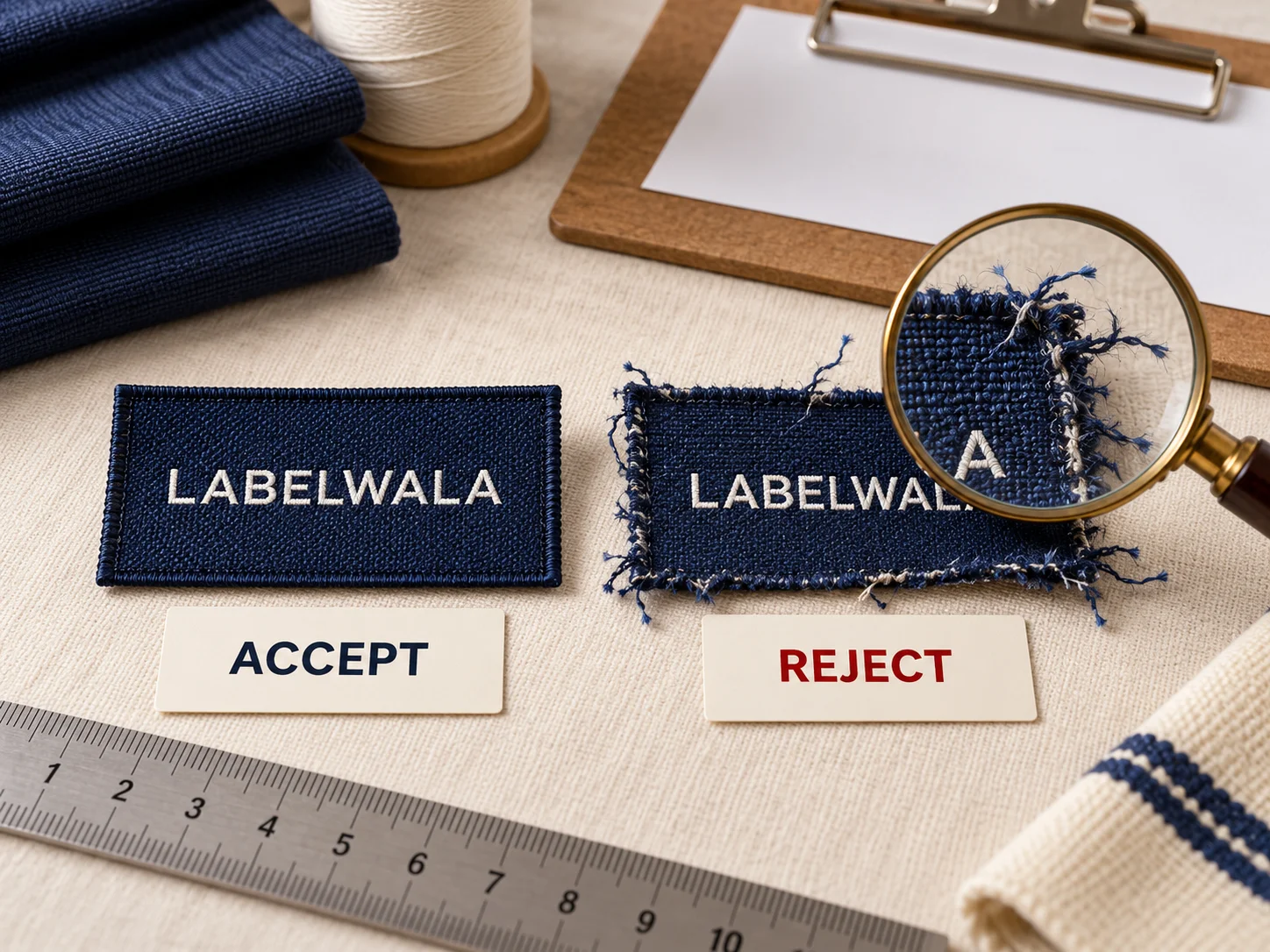
A well-made woven label can carry a gorgeous logo and still be ruined by a raw, unsealed edge that frays after a few washes. The edge is one of the first things to check when you're judging label quality: a clean, secure edge signals a good label; a rough, loose one is where a cheap label starts to come apart.
A plain cold-cut edge with no sealing or fold will fray. If a quote is unusually cheap, check whether the edge is actually finished. That's often what's been skipped.
These rules are built into the tool. The free label designer flags type that is too small to weave, keeps the fold allowances honest and exports print-ready artwork at 300 DPI.
How does heat seal a woven label edge?
Here's the lucky part: woven labels are almost always polyester, and polyester melts. That means the cut edge can be fused with heat so the threads bond and simply can't unravel. Two methods do this, and they cut and seal in a single action.
High-frequency vibration slices and fuses the edge at once. Fast and economical for straight cuts, with a clean, slightly firm sealed edge.
A focused beam follows intricate or curved outlines with precision, sealing as it goes. The choice for custom shapes and detailed patches.
How does folding hide the cut edge?
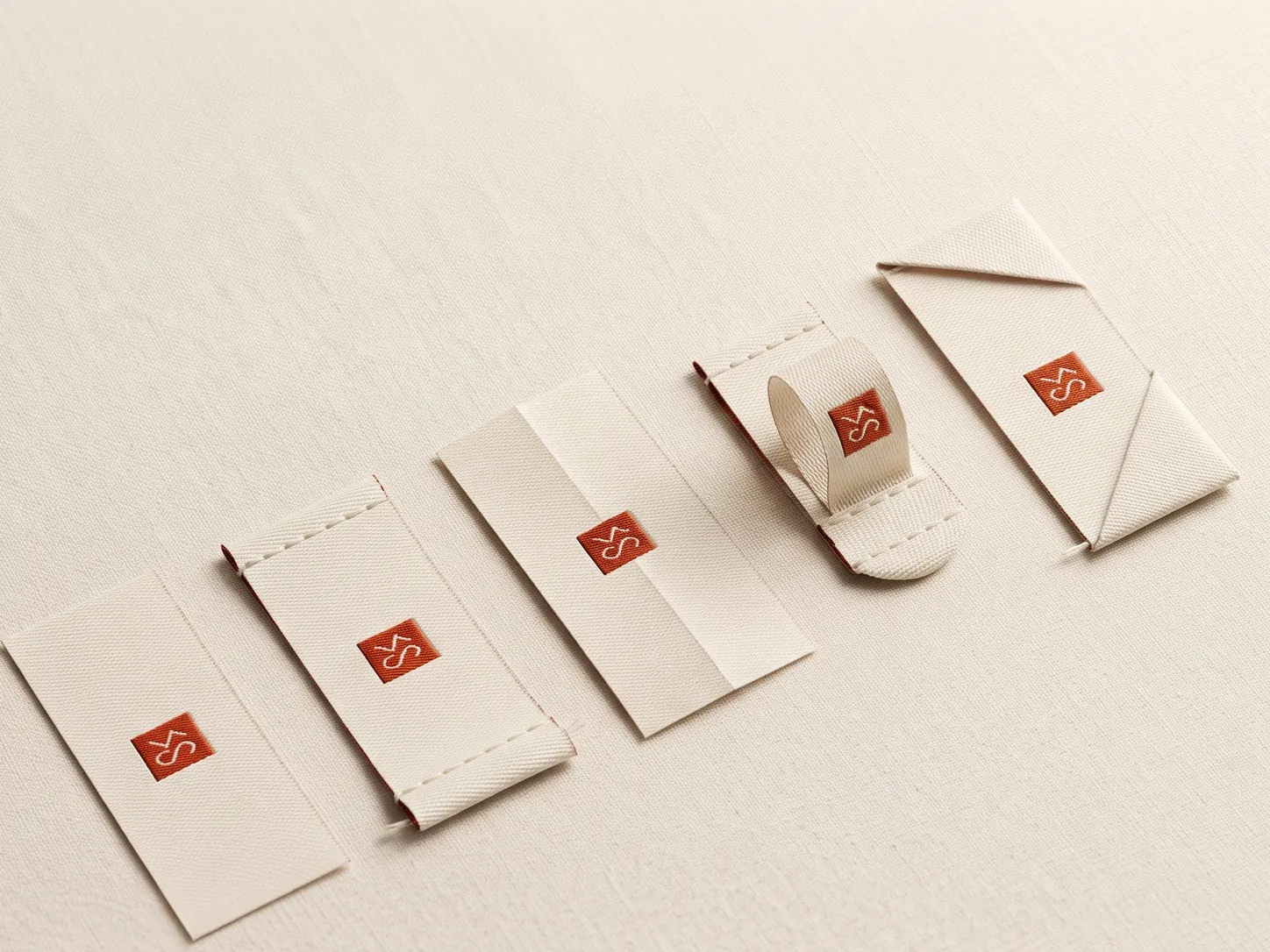
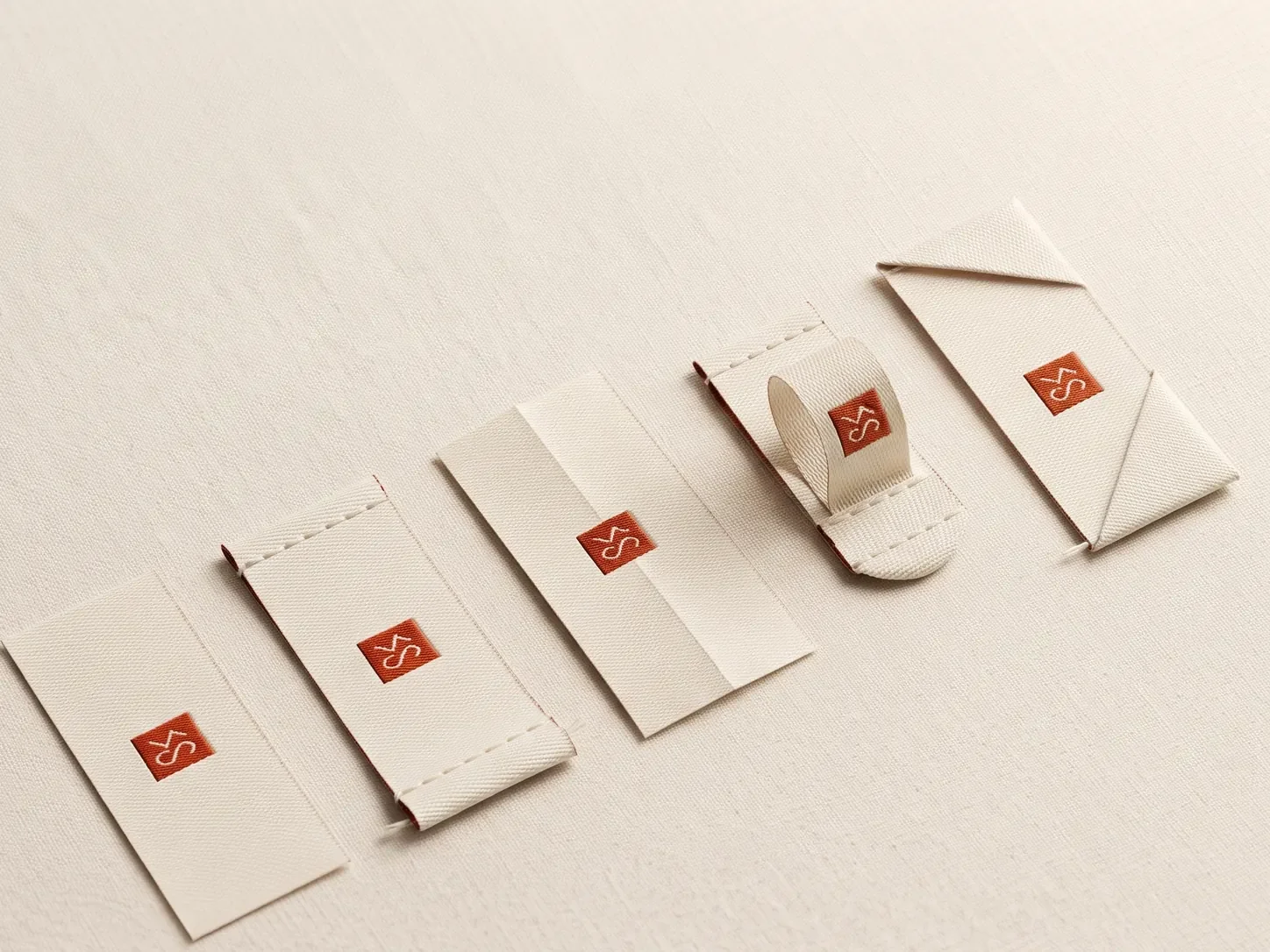
The other approach doesn't seal the cut, it hides it. The raw edge is folded under and stitched through, tucking the loose threads inside the fold and the seam where they can't fray or show. This is why folded labels look so neat, and it's the traditional finish for a visible neck label. The common folds:
- End-fold (Manhattan fold): both short ends folded under, giving a tidy flat label with hidden edges.
- Centre-fold: folded in half so the design shows on both sides, sewn into a seam at the fold.
- Loop / mitre fold: folded into a loop or angled corners for specific stitching and looks.
Folding is a topic of its own. How each fold is stitched and where it suits is covered in label fold types explained.
Are edge finish and fold type the same thing?
These get muddled, so here's the clean distinction:
How the cut edge is sealed so it doesn't fray: heat-sealed (ultrasonic/laser) vs a plain cold cut.
How the finished label is folded before sewing: end-fold, centre-fold, mitre or loop.
A folded label hides its edges in the fold, so folding is one way of handling edges. A flat label doesn't fold, so its exposed cut edge must be heat-sealed. In practice you decide both: flat or folded, and how any exposed edge is sealed.
Which finish should you choose?
- It's a visible main or neck label
- You want the neatest, most finished look
- You need both sides to show (centre-fold)
- It's sewn into a seam or hem
- You want a modern, flat straight-cut look
- It's a custom shape or die-cut patch (laser)
- You're cost-focused on a simple rectangle (ultrasonic)
- The label is surface-applied rather than seam-sewn
Whatever you choose, feel the edge on a sample. A sealed edge should be smooth, not sharp or brittle; a folded edge should sit flat, not bulky. For a neck label, run it against your wrist: if the edge irritates there, it'll irritate at the neck.
Why is the edge what a customer actually feels?
Brands choosing a label usually frame comfort as a material question, and it mostly is not. The single biggest influence on how a label feels against skin is the edge, not the weave.
A sealed edge is made by melting, so it is firmer than the cloth on either side of it. That firmness is what a neck notices. It is why a straight-cut damask label, made from the softest material available, can still be the one a customer complains about, while a folded taffeta label in a cheaper cloth sits comfortably.
The practical order to decide in is: position first, then edge, then material. If someone tells you a label scratches, check the edge before changing the cloth. It is cheaper to fix and it is more often the actual cause.
- Anything at the neck wants a folded edge, or at minimum a well-finished seal.
- Side seams and pocket bags can take a sealed cut edge, because it is enclosed and nobody touches it.
- Kidswear and next-to-skin wants folded edges as a default, since a firm edge rubs the same spot constantly.
- External tabs and patches benefit from a firm sealed edge, because it holds the shape crisply.
Why does sealing only work on polyester labels?
The heat-sealed edge depends entirely on the fibre melting cleanly, and that rules some materials out.
Polyester damask, satin and taffeta all melt and fuse, which is why they take an ultrasonic or laser cut so well. Cotton does not melt. It scorches, so a heat-cut cotton label arrives with a brown, discoloured edge and a burnt smell. Natural fibres therefore have to be folded, or woven with a selvedge edge, or hemmed.
This matters if your brand is positioned on natural materials. An organic cotton range that wants a cotton label cannot simply specify a laser cut and expect the same result, and it is worth resolving before the design is signed off instead of at sampling.
- Polyester: ultrasonic, laser or heat cut all work and seal cleanly.
- Cotton and natural blends: fold the edge, or use a woven selvedge. Do not heat cut.
- Mixed constructions behave unpredictably, so sample before committing.
How to judge an edge on a sample
Edge quality is the fastest way to tell a well-made label from a cheap one, and it takes about thirty seconds.
- Run a fingernail along it. A good seal is smooth and continuous. A poor one catches, or has bobbly hard spots where the fuse went too far.
- Look for scorching. A brown or yellow tint along the cut means too much heat, and it will be visible on a pale label.
- Check the corners. Corners are where a seal breaks down first, so an edge that is clean along the sides and ragged at the corners is a warning.
- Pull gently across the edge. Nothing should lift or separate.
- Wash it, then check again. This is the only test that predicts what happens in the garment, and edges are the first thing to go.
Judge the edge after washing, not on delivery. An edge that is slightly loose in the box unravels progressively for the life of the garment, so a fault you were willing to overlook becomes customer-visible a few months later.
Common mistakes
- Accepting an unusually cheap quote without checking whether the edge is finished at all.
- Specifying a heat cut on a cotton label, which scorches instead of sealing.
- Choosing a straight cut at the neck to save money, then dealing with a scratchy edge.
- Judging the edge on delivery instead of after a wash.
- Ignoring the corners, where a seal fails first.
- Confusing edge finish with fold type, which are two separate decisions.
- Leaving the edge choice to the supplier on a label that sits against skin.
Ask what the edge finish is on any quote, in the same breath as material and size. It is a one-line question, and it is the fastest way to find out whether two quotes are really for the same label or only look like it.
What edge finish costs
Edge finish is one of the cheaper decisions on a label, which is exactly why it is a poor place to economise.
An ultrasonic cut is the standard and is effectively included in the price of a rectangular label. Laser cutting costs more, because it is slower and is priced by the length of the cut path, so an intricate outline genuinely costs more than a straight one. Folding adds a finishing step, and on a centre or loop fold it also roughly doubles the material used, which is the larger part of the difference.
Against the whole quote, none of this moves the number very much at all. Material, size and colour count dominate. So when a quote comes in unusually low, the saving is rarely in the edge itself, it is that the edge was skipped, and that is the one economy a customer eventually notices.
Edge finish is not the same as fold
These two get used interchangeably and they are separate decisions that interact.
Edge finish is how a cut edge is stopped from fraying: ultrasonic, laser, hot knife, or nothing at all. Fold is how the finished label is folded before it is sewn in: end fold, centre fold, mitre, loop, or flat.
They interact because folding hides edges. A folded label tucks its raw edges inside the fold and into the seam, so the edge finish matters less. A flat label exposes all four edges, so the seal is the only thing protecting it. That is why a flat label with an unsealed edge is the worst combination available, and why it is also the cheapest to make.
Decide both, in that order: the position tells you the fold, and the fold tells you how much the edge finish has to do. See our fold types guide for what each construction hides.
Specifying an edge with Labelwala
25 years making woven and printed labels in Ahmedabad, Gujarat.
- Minimum order: 1,000 pieces, counted per design rather than per order.
- Production: 7-10 days from artwork approval, or 3-5 days on a rush job.
- Delivery: anywhere in India; timing follows the destination and the size of the consignment.
Tell us the position the label sits in and whether it touches skin. That single answer decides the edge, and it matters more to how the finished label feels than the choice of weave does. If the label sits at a bare neck, the base material is worth settling before the edge, since it decides more of the feel.
We are rated 5.0 on Google from 27 reviews.
The short answer
A woven label's edge has to be finished or it frays. Because woven labels are polyester, the cut edge can be heat-sealed: ultrasonic for fast, economical straight cuts, laser for precise shapes and patches. The alternative is to fold the raw edge away inside the fold and seam, which gives the neat look of a classic neck label. Edge finish (how the cut is sealed) and fold type (how the label is folded) are related but separate decisions, you pick both. For a visible neck label, folded usually looks best; for a flat or shaped label, make sure the edge is heat-sealed. Tell us your label and where it's sewn, and we'll recommend the finish and sample it so you can feel the edge before bulk.