In brief
Eco-friendly label options are organic cotton, which is soft, biodegradable and needs GOTS material for a certified claim; recycled polyester (rPET) spun from bottles, the easiest swap because it performs like standard polyester; TENCEL lyocell from wood pulp; and unbleached, low-impact-dyed tape. Pick the material that matches your fabric and lasts the garment's life, and word the claim specifically.
You sourced organic cotton, you cut waste, you wrote a sustainability page, and then a standard virgin-polyester tag goes in the neck. For an eco-conscious brand, the label is the last place the story can break. The good news: labels now come in genuinely lower-impact materials that look and feel premium.
This guide covers the sustainable label materials available, their trade-offs, and, just as important: how to word your sustainability claims so they're honest and greenwashing-proof.
At a glance: the eco label options
There's no single "greenest" material: the right one matches your fabric, your priorities and the claim you can honestly stand behind.
Option 1, Organic cotton labels
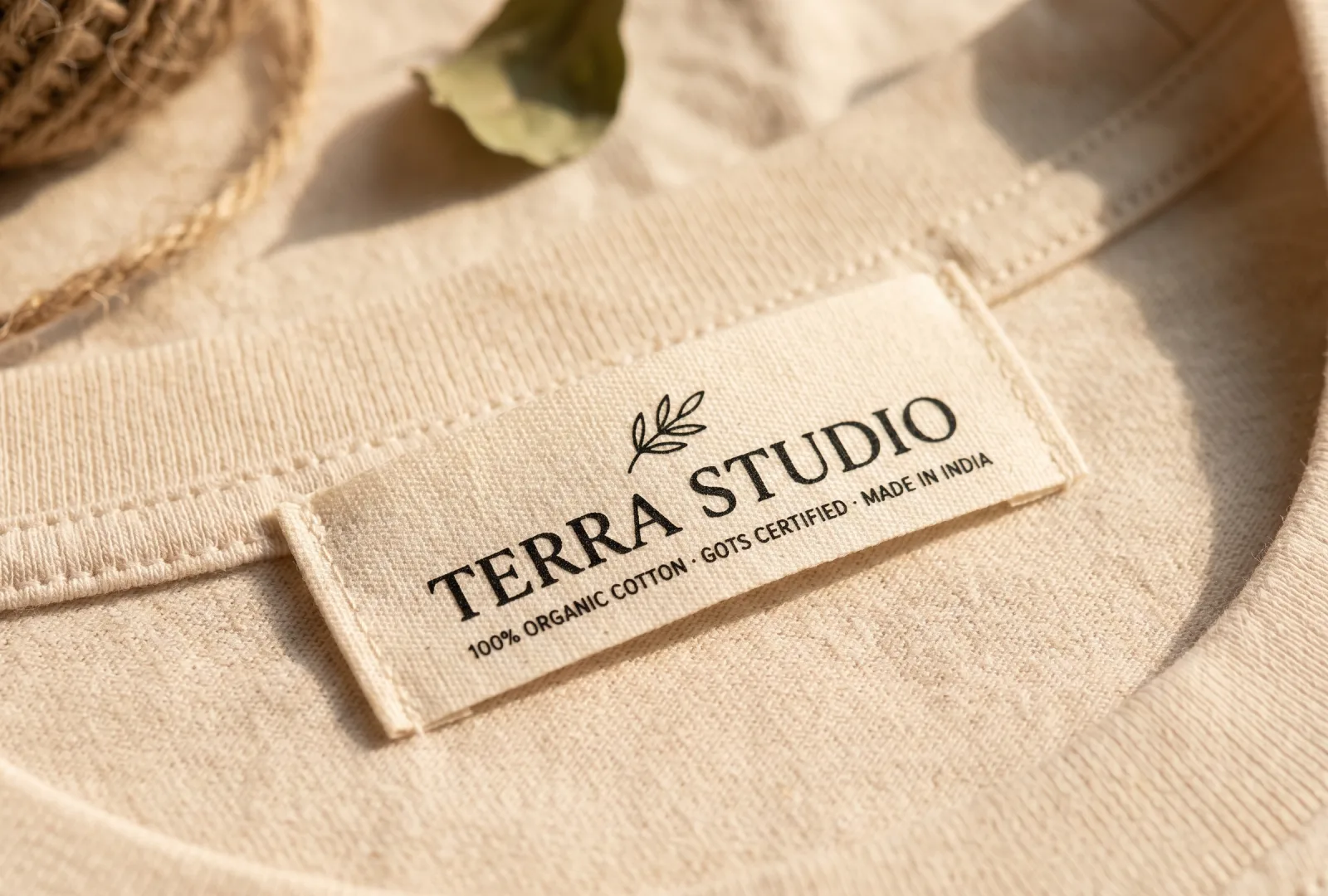
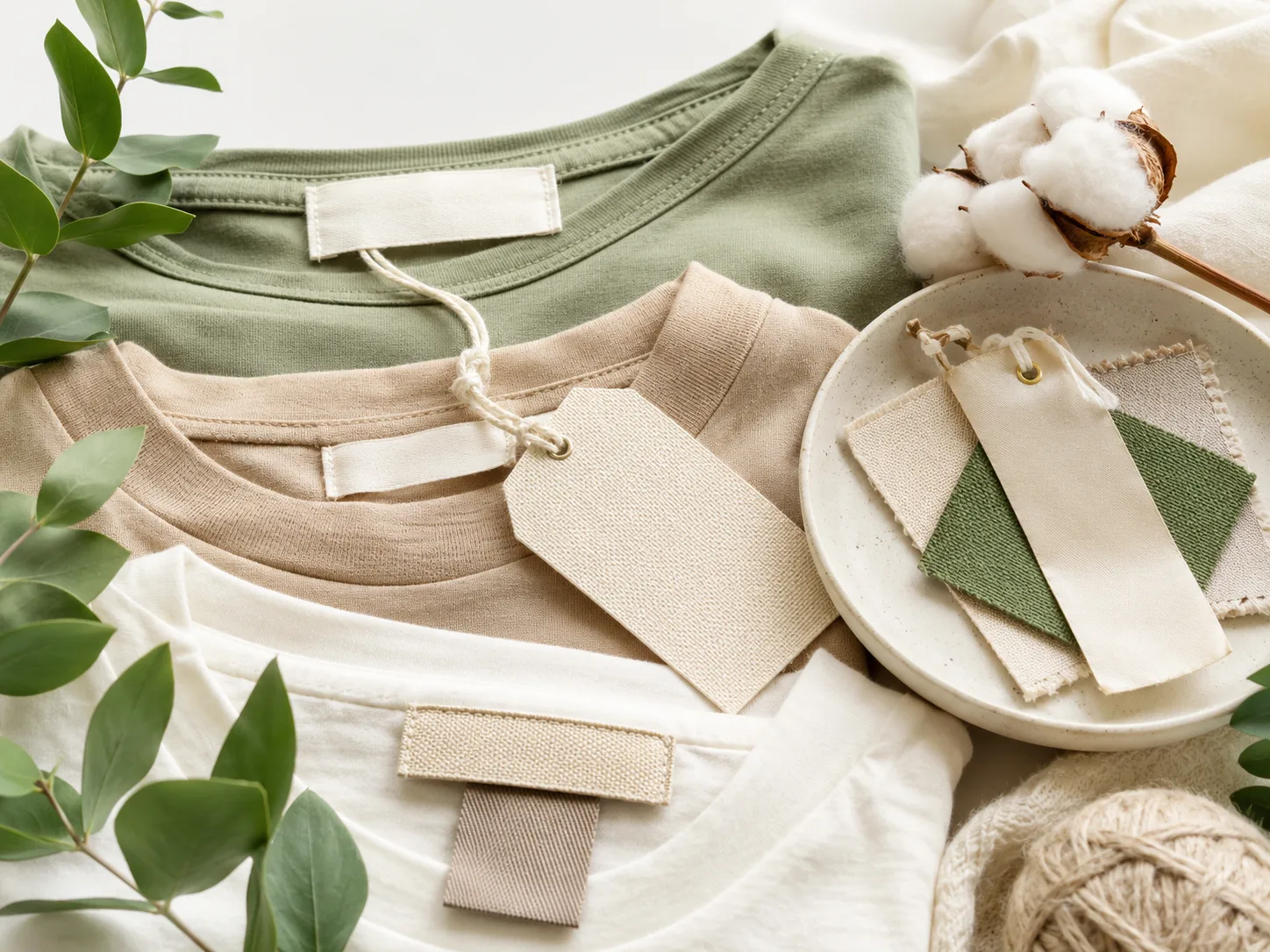
Woven or printed on organic cotton tape. Soft, natural, biodegradable, and a perfect visual match for natural-fibre garments. The default choice for brands built on a natural, earthy aesthetic.
- Made from: organic-grown cotton, often unbleached / natural tone
- Feel: soft, matte, natural, pairs beautifully with khadi, linen, organic cotton wear
- Best for: natural-fibre brands, ethnic/boutique, babywear, slow-fashion
- Note: for a certified claim you need GOTS-certified material and chain of custody
See our guide to organic cotton & eco labels in India.
Option 2, Recycled polyester (rPET) labels
Standard-looking woven or satin labels made from recycled polyester: often spun from used plastic bottles. The lowest-friction swap: it looks and performs like normal polyester but diverts plastic from waste.
- Made from: recycled PET (rPET), e.g. post-consumer bottles
- Feel: identical to standard polyester woven/satin labels
- Best for: any brand wanting an easy, durable, lower-impact swap
- Note: GRS/RCS certification supports a "recycled content" claim
Option 3, TENCEL / lyocell & other renewables
Labels made from wood-pulp-based fibres like TENCEL lyocell: renewable, soft, and produced in a closed-loop process. A premium, soft-handed option for brands that want a renewable story beyond cotton.
- Made from: sustainably sourced wood pulp (lyocell)
- Feel: very soft, smooth, premium
- Best for: premium sustainable fashion, soft-touch innerwear and loungewear
Which eco material fits your brand?
- Natural, biodegradable look
- Pairs with natural-fibre wear
- GOTS for certified claims
- Soft, matte, earthy
- Easiest swap from standard PET
- Durable, washes like polyester
- Diverts plastic waste
- GRS/RCS for claims
- Renewable wood-based fibre
- Very soft premium hand
- Closed-loop production
- Great for soft-touch garments
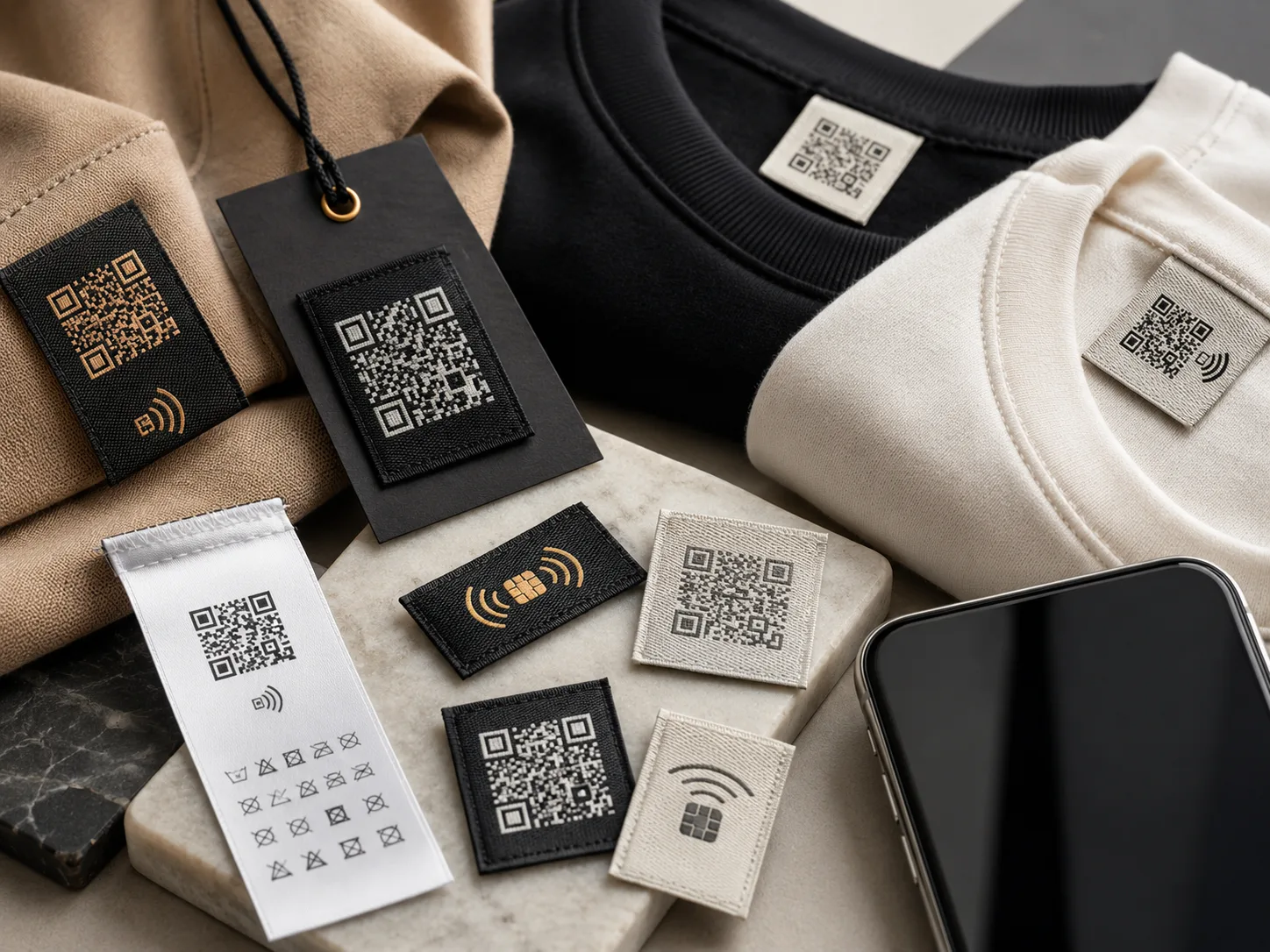
- QR/NFC hosts extended care info
- Less printed on fabric
- Doubles as a product passport
- See our QR/NFC labels guide
A QR or NFC smart label is a natural partner for an eco brand. It can carry sourcing, care and recycling information digitally, reducing what must be printed and acting as a digital product passport.
How do you label claims without greenwashing?
The fastest way to lose customer trust, and run into misleading-claims rules, is a vague green claim you can't back up. Keep it specific and substantiated.
Say "Made with 100% recycled polyester", not just "eco" or "green".
Only claim what the actual material is. Match the claim to the certified input where possible.
GOTS for organic, GRS/RCS for recycled: applied to the supply chain, not just the tag.
A recycled label doesn't make the whole garment sustainable. Claim the part that's true.
Pro tips
Match the label to the fabric. An organic-cotton tag on an organic-cotton garment reads as coherent; a glossy synthetic tag on natural fibre breaks the story. Coherence is what customers notice.
Durability is sustainability too. A label that fades or falls off and needs replacing isn't green. Choose a lower-impact material that still lasts the life of the garment.
Quick start: tell us your garment, your sustainability goals and any certification you hold. We'll recommend the right recycled or natural label material, and a smart tag if you want a digital passport. Message Labelwala or use the quote form.
How do customers actually read the label?
Worth remembering who this is for. In this segment the label is not decoration, it is evidence, and the audience is unusually willing to check.
A customer buying an organic cotton tee looks at the neck. Finding a virgin polyester tag there is a small thing that undermines a large claim, and it is exactly the detail that gets photographed and posted. Conversely a cotton label with a plainly worded, specific claim does quiet work every time the garment is worn.
That is the argument for spending here rather than on the sustainability page. The page is read once, by people already persuaded. The label is in the garment for years, and it is the part of the story a sceptical buyer can actually verify by touch.
Why does the label sit inside the testing boundary?
A point that catches out brands doing everything else properly: the label is part of the garment, so it falls inside the same restricted-substances regime as the fabric.
If a shipment is tested for azo dyes or formaldehyde, the label is tested with it. A label from an unverified source can fail a test the garment itself passes, and the consignment is held on the strength of a component worth a fraction of a rupee. On children’s products the limits are typically tighter again.
- Ask what the base and the inks are tested to, by name rather than by assurance.
- Keep the documentation with the shipment file, and keep it current, because certificates expire and an audit checks dates.
- Match the standard your buyer applies rather than assuming a general statement covers it.
- Do not switch label supplier mid-programme without re-establishing the same paperwork.
Where labels are routed through certified supply partners, the licence number and transaction certificate are usually what a compliance team actually wants to see, and being able to pass them through on request is worth more than any wording on the label itself.
Where should you start if you are switching?
Moving an existing range onto lower-impact labels is easier in stages than all at once, and the order matters.
- Start with the brand label. It is the piece customers see and touch, so it carries the most of the story per rupee spent. It is also usually the simplest artwork, which makes the material swap straightforward.
- Fix the fastener next. Swapping a plastic barb for cotton or jute string is the cheapest visible change available, and it removes the most obvious contradiction in the set.
- Then the hang tag stock, to recycled or kraft card, which is a straightforward substitution.
- Leave the care label until last, and possibly leave it alone. Legibility over years matters more there, and a printed care label alongside a cotton brand label is a defensible split.
- Ask about the sewing thread whenever you next brief a garment maker.
Doing it in that order means the visible parts change first, which is both cheaper and more useful, and it avoids the common outcome where a brand switches everything at once and discovers the care label is now unreadable after a season.
What does each eco material cost you in practice?
Every lower-impact material trades something away, and knowing what makes the choice easier than comparing marketing descriptions.
- Organic cotton gives you the strongest fibre story and a matte natural hand. It cannot be heat or laser cut, because cotton scorches instead of fusing, so the edge has to be folded, hemmed or selvedge. It also absorbs water, so it can shrink slightly and dries slower.
- Recycled polyester behaves exactly like virgin polyester: it seals at the cut, holds fine print, and stays dimensionally stable. The story is diversion of existing plastic rather than biodegradability.
- Lyocell and wood-pulp fibres are soft and have a good process story, but they are weaker wet, so they need the same care in construction that viscose does.
- Unbleached and undyed is the quietest saving of all, because it removes a whole processing stage. It also limits you to natural tones, which suits some palettes and not others.
None of these is the sustainable option. Each is a different trade, and the honest approach is to pick the one whose weakness you can live with on the garment in question.
Make the whole set agree
The label is rarely the weak link on its own. What undermines an eco claim is a set where the components disagree with each other.
- Base and ink together. Cotton with water-based ink composts. Cotton with plastisol does not, and it is the combination brands end up with by accident.
- The care label is allowed to be different. Composition and symbols need a smooth printed substrate to stay legible for years, so a printed care label alongside a cotton brand label is a defensible split rather than a compromise.
- The sewing thread is polyester by default and almost never specified.
- The hang tag fastener. Cotton or jute string keeps a kraft tag single-material; a plastic barb makes it mixed.
Quote the whole set as one job. It is the only reliable way to catch a component that quietly arrived as standard polyester because nobody said otherwise.
Common mistakes
- Putting a virgin polyester label in a certified organic garment.
- Specifying a laser or heat-cut edge on cotton, which scorches rather than sealing.
- Pairing a natural base with a plastic-based ink.
- Using vague words that mean nothing and attract scrutiny.
- Making a flat certification claim when a supply partner holds the licence.
- Letting certificates lapse and failing an audit on dates rather than substance.
- Forgetting the label sits inside the same chemical testing boundary as the fabric.
Sourcing sustainable labels from Labelwala
We are label manufacturers in Ahmedabad, Gujarat, and have been for 25 years.
- Minimum order: 1,000 pieces, counted per design rather than per order.
- Quotes: usually within 2 hours on a working day.
- Production: 7-10 days from artwork approval, or 3-5 days on a rush job.
Tell us which claim you need to support and we will tell you what the construction has to be, and what we can put in writing. The edge is usually the constraint people meet first.
We are rated 5.0 on Google from 27 reviews.
The short answer
For a conscious brand, pick the label material that matches your garment and your story: organic cotton for a natural, biodegradable look, recycled polyester (rPET) as the easiest durable swap, or TENCEL/lyocell for a soft renewable premium feel. Pair it with a QR/NFC smart tag to carry care and recycling info digitally. Whatever you choose, label your claims specifically and back them with the real material. Honest sustainability is the only kind that builds trust.