In brief
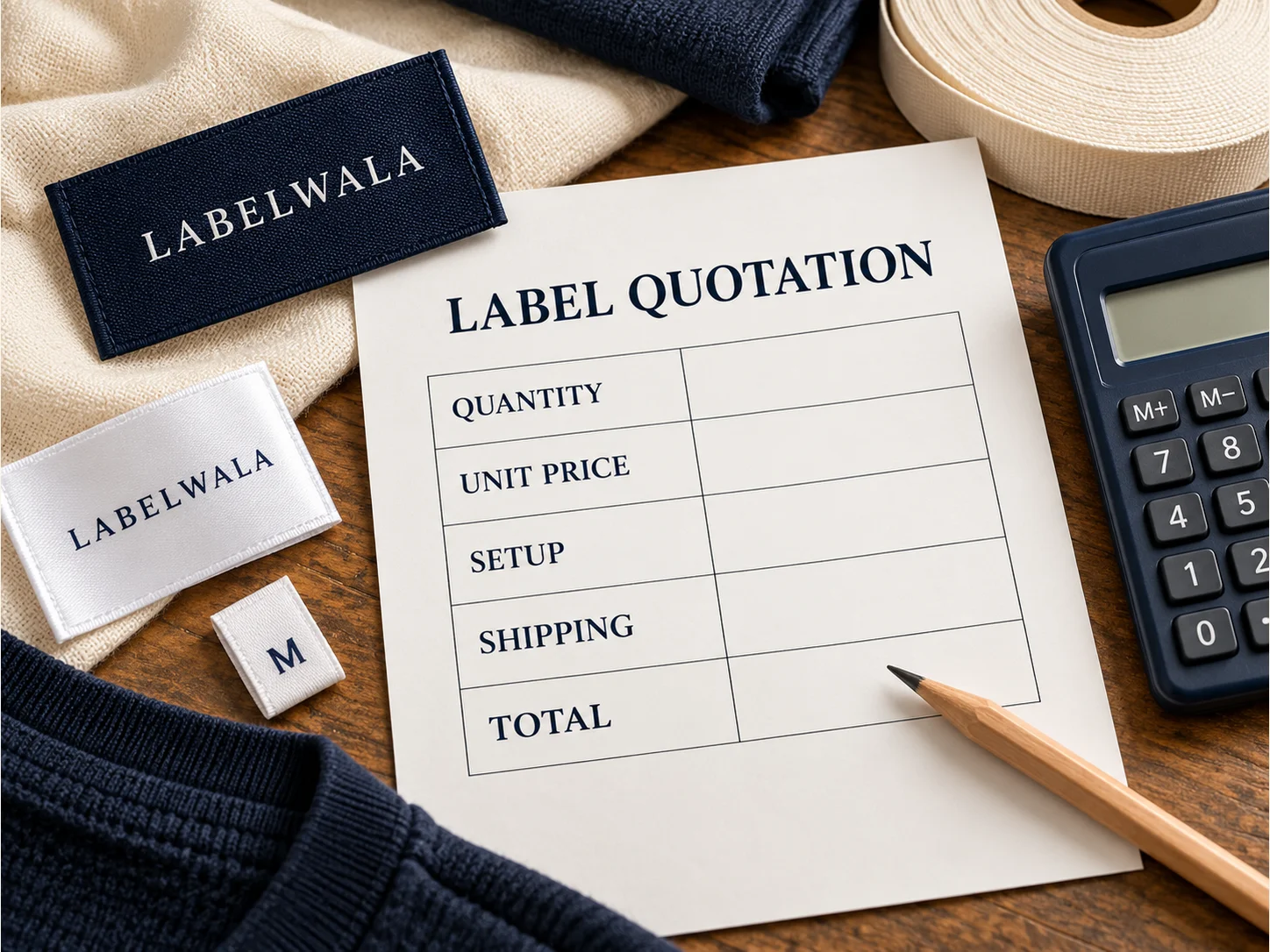
A complete label quotation states the material, finished size, colour count, fold, quantity and rate, plus one-time setup or die charges, sampling, GST with the HSN code, packing, freight, lead time and validity. Convert every quote to the same basis, per piece or per 1000, and ask in writing for any missing line before comparing.
A label quotation looks simple: a rate, a quantity, a total. But two quotes for what seems like "the same label" can differ by 40%, and the gap is almost never generosity. It's specification.
This guide walks through every line you'll see on a quote, what it means, and what to ask when it's missing. Read it once and you'll never compare two quotes badly again.
What does a complete label quotation contain?
Before anything else, check the quote actually specifies what you're buying. A rate without a specification is not a quote. It's a number. A complete label quotation names all of the following:
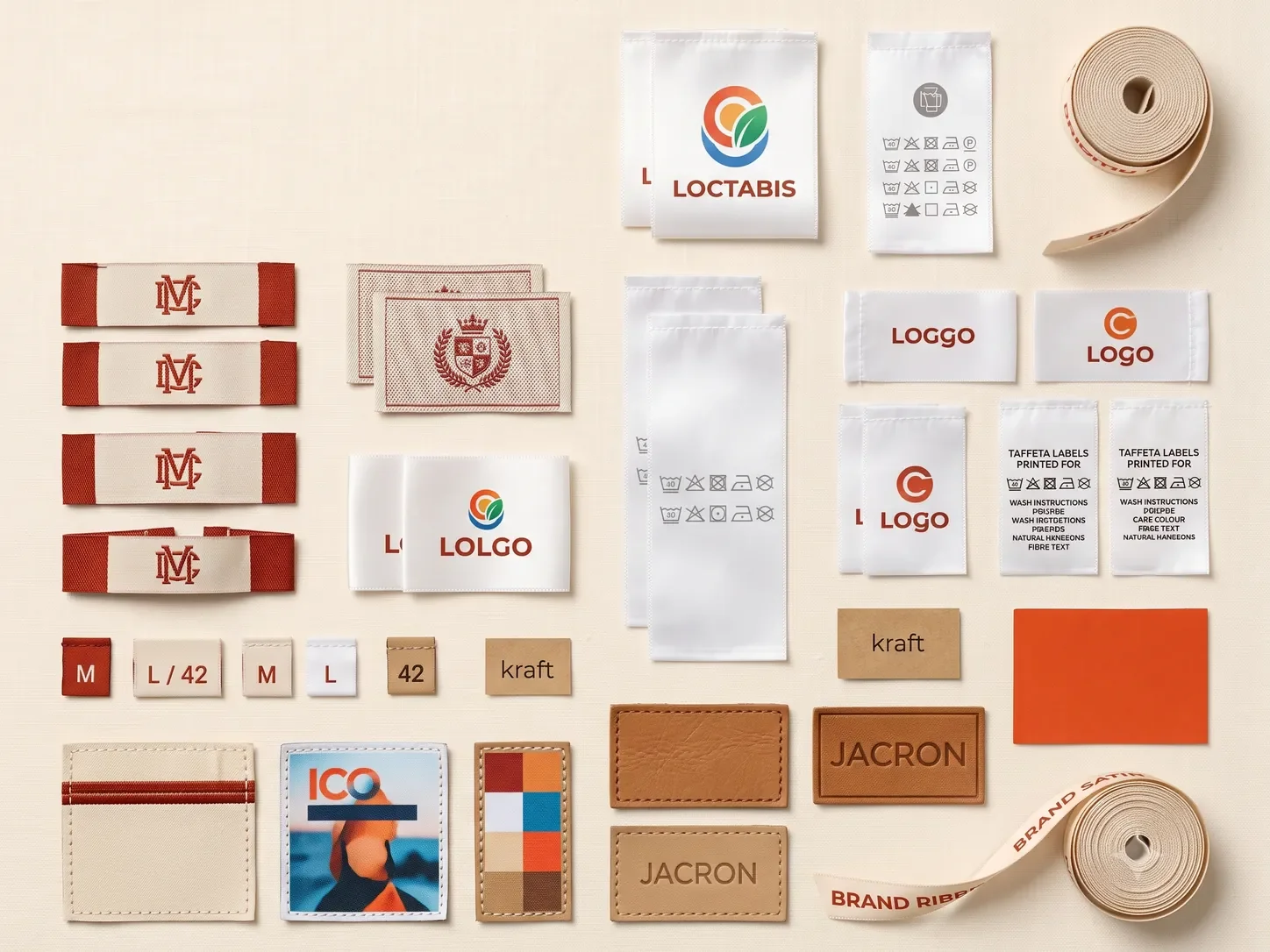
- Material and quality: woven (damask/taffeta), satin, cotton, or printed; plus thread quality
- Finished size: width × height of the label as it will arrive
- Number of colours: how many thread or ink colours appear in the design
- Fold type: straight-cut, end-fold, centre-fold, loop or mitre
- Quantity and rate, and clearly on what unit basis
- One-time charges: setup, loom, screen or die
- Sampling: cost, and whether it's adjustable against bulk
- GST and HSN, and whether the rate is inclusive or exclusive
- Lead time and validity: when it ships, how long the price holds
Every missing line is a future charge. A quote that omits setup cost, sampling or GST isn't cheaper, it's incomplete. Ask for the missing lines in writing before you compare.
Skip the artwork back-and-forth. Design your label in the free label designer and send the design and spec to our studio for a quote in one step.
What actually drives the price of a label?
Label pricing isn't one number with add-ons. Four variables move the rate independently, change any one and the price changes:
This matters when comparing quotes. If Supplier A quotes a 5cm label in 4 colours with an end-fold, and Supplier B quotes 4.5cm in 3 colours straight-cut, B will be cheaper, and you are not looking at the same product. Line the specifications up first. You can model these variables yourself on our price calculator.
Per piece or per 1000?
Labels are quoted per 1000 as often as per piece, because per-piece rates land in fractions of a rupee and read awkwardly. Neither basis is more honest, but mixing them up is the single most common comparison error.
Convert both quotes to the same basis before you look at the numbers. Then add the one-time charges divided across your actual order quantity. That figure, landed cost per label, is the only number worth comparing.
What are setup, loom and die charges on a quote?
A setup charge covers the one-time work of getting your design onto the machine: setting up the loom for a woven label, or making screens and plates for a printed one. Key points:
- It's charged once per design, not per piece
- It's the main reason small orders cost more per label
- On an unchanged repeat order it's usually reduced or waived, ask
- Change the artwork, even slightly, and it typically applies again
This is also why splitting one design across two suppliers rarely saves money: you pay setup twice.
Where does sampling sit on a label quotation?
A sample needs the same loom or screen setup as a full run but yields a handful of pieces, so it's often charged separately. What to establish:
- Is the sampling fee adjustable against the bulk order once confirmed?
- Do you get a physical sample before bulk production, not just a digital mock-up?
- How many revisions are included before it's charged again?
Never approve bulk from a screen image alone. Colour on a monitor is not colour in thread. A physical sample is the only reliable approval, and a supplier unwilling to send one before bulk is telling you something.
How do GST and HSN appear on a label quote?
Clothing labels are textile articles and carry GST on the invoice value. Your quote should state the HSN code and, critically, whether the rate is inclusive or exclusive of GST.
This one line causes more bad comparisons than any other. One supplier quotes exclusive, another inclusive, and the "cheaper" quote turns out to be the dearer one once tax lands. Always confirm the basis in writing, and make sure you're comparing like with like.
Packing, freight and lead time
Ask how the labels arrive (loose in packs, strung in bundles, or roll-form), and who pays freight. For a large order, freight is a real line item, not a rounding error. And confirm the lead time is quoted from artwork approval, not from the date of enquiry; those can be a fortnight apart. Our guide to label lead times covers what's realistic.
Validity and price revision
Most label quotations hold for 15-30 days, because yarn and base-fabric prices move. A quote with no stated validity is worth clarifying: if you're planning a run months out, ask what would trigger a revision so there's no surprise at PO stage.
Reading a good quote against a vague one
- Material, size, colours and fold all stated
- Setup and sampling shown as separate lines
- GST basis and HSN code named
- Lead time from artwork approval
- Validity period stated
- Physical sample offered before bulk
- A rate with no specification attached
- No mention of setup or sampling
- Silence on GST
- No size or colour count
- No lead time or validity
- No sample before bulk
A four-step comparison worksheet
Same material, size, colour count and fold across every quote.
Convert all rates to per-piece, or all to per-1000.
Setup plus sampling, divided by your real order quantity.
Put every quote on a GST-inclusive footing, then compare.
What can a label quotation not tell you?
A quotation is a good document for comparing commercial terms and a poor one for comparing labels, because the things that separate a good label from a mediocre one mostly do not appear in it.
- Density. Two woven quotes at different prices are often two different thread counts, and the cheaper one loses detail in exactly the places your logo needs it.
- Thread and ribbon quality. A softer, better-finished base costs more and feels different at a neck. No line item says so.
- Edge finish. A clean sealed cut and a rough one both read as cut on paper.
- Consistency. Whether the ten thousandth label matches the first is a question about the supplier, not about the quote.
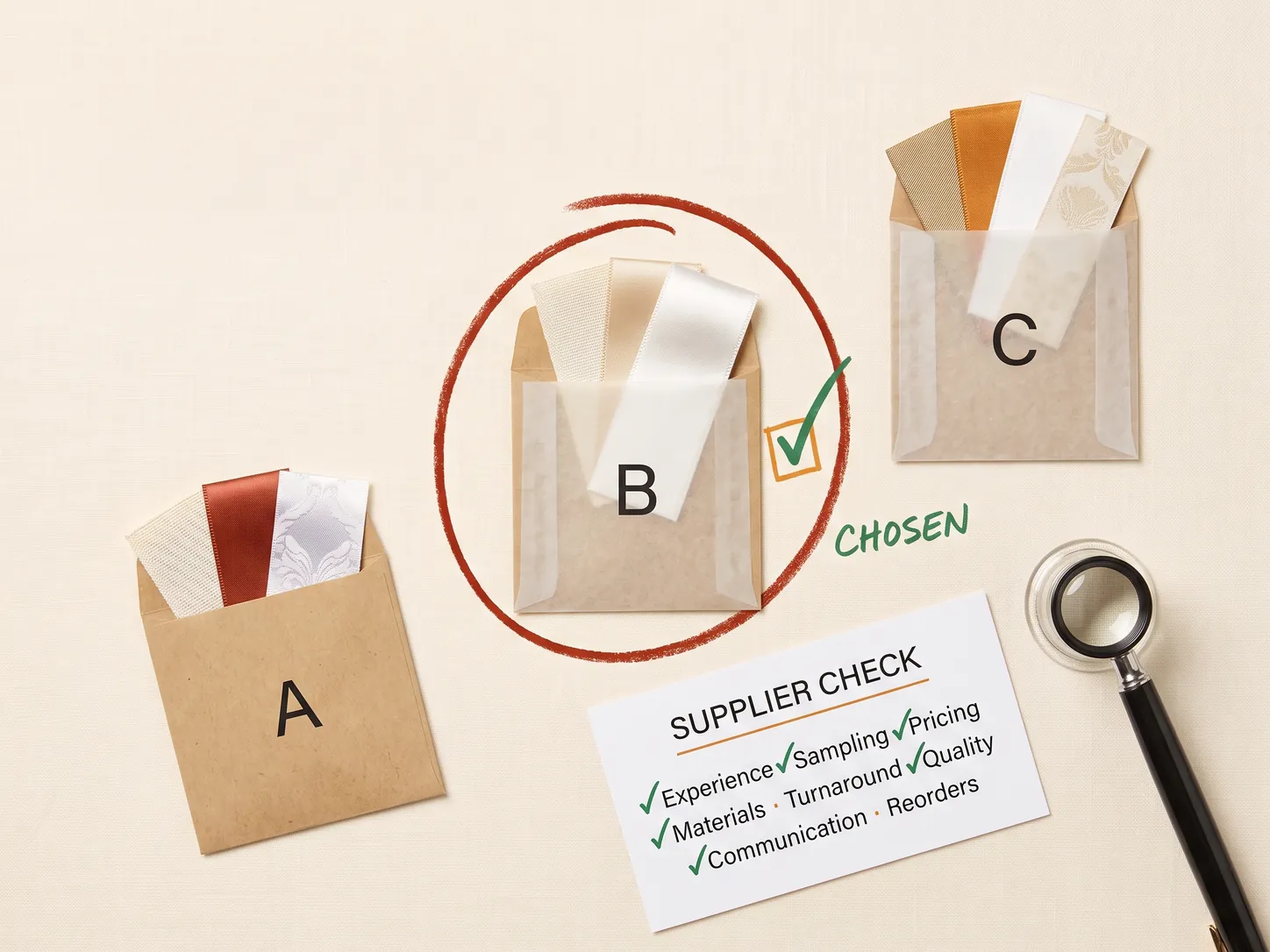
The only reliable way through this is to compare samples of your own artwork rather than sample cards, and to compare them before comparing prices. A supplier sample card is chosen to flatter the process; how a given supplier handles your mark, at your size, is the thing you are actually buying.
Once you have samples in front of you, the price comparison becomes meaningful, because you finally know whether the two numbers describe the same thing.
Questions worth asking before you accept
Most quotation disputes come from something that was neither stated nor asked. A short list settles nearly all of them.
- Is that the finished size or the flat size? On a folded label they are very different, and the answer changes the quote.
- Is sampling included, and how many rounds? A second and third strike-off can be free or chargeable, and finding out afterwards is unpleasant.
- Is the setup charged once or per reorder? Most of it should not repeat on a reorder of the same design.
- What is the tolerance on quantity? Trims are commonly supplied slightly over or under, and you want the range stated rather than assumed.
- Are packing and freight in the number? Small consignments carry proportionally more freight.
- What is the lead time from artwork approval, not from the enquiry? Those are different dates and the second one is longer.
- How long is the price held? Yarn and ribbon prices move.
Ask them in writing and keep the replies with the quote. A quotation plus a paragraph of answers is a far better record than a quotation alone, and it is the document that resolves the argument if one arrives.
It is also the document that makes the next order quick, because most of the answers do not change between runs and the second enquiry can simply refer back to them.
Keep it with the approved sample rather than in an email thread. Threads get archived, samples get kept, and a year later the sample is what someone will actually go looking for.
The same file should hold the artwork the quote was based on. Quotes drift out of date when the artwork moves and nobody reconnects the two, and a price agreed against a three-colour design does not survive a fourth colour being added quietly during approval.
Common mistakes
- Comparing per-piece prices quoted at different quantities as though they were the same offer.
- Comparing prices before comparing samples of your own artwork.
- Assuming the quoted size is the finished size on a folded label.
- Missing whether the figure is inclusive or exclusive of tax.
- Leaving the fold out of the enquiry and being requoted after approval.
- Specifying more colours than the label needs, which is usually the largest avoidable line.
- Reading the lead time from the enquiry date rather than from artwork approval.
- Accepting a price with no stated validity, then discovering it has moved at reorder.
Getting a quotation from Labelwala
We are label manufacturers in Ahmedabad, Gujarat, and have been for 25 years.
- Quotes: normally back inside 2 hours if you send the brief on a working day.
- Minimum order: 1,000 pieces, counted per design rather than per order.
- Production: 7-10 days once artwork is approved. Rush jobs run 3-5 days.
- Delivery: across India, depending on destination and consignment size.
Send the artwork, the finished size, the fold, the quantity and where the label sits. Those five are what a complete quote is built from, and sending them together is what turns a two-day exchange into a single reply.
We are rated 5.0 on Google from 27 reviews.
The short answer
A label quotation should state material, size, colour count, fold, quantity and rate, plus setup, sampling, GST with HSN, freight, lead time and validity. Price is driven independently by size, colour count, fold and quantity, so align specifications before comparing rates. Convert every quote to the same unit basis, add one-time charges spread across your actual quantity, and put them all on the same GST footing. A quote well below the others usually differs in thread count, size or colour count rather than in goodwill. Send us your artwork and quantity and we'll return an itemised quote with every line named, and a physical sample before bulk.