In brief
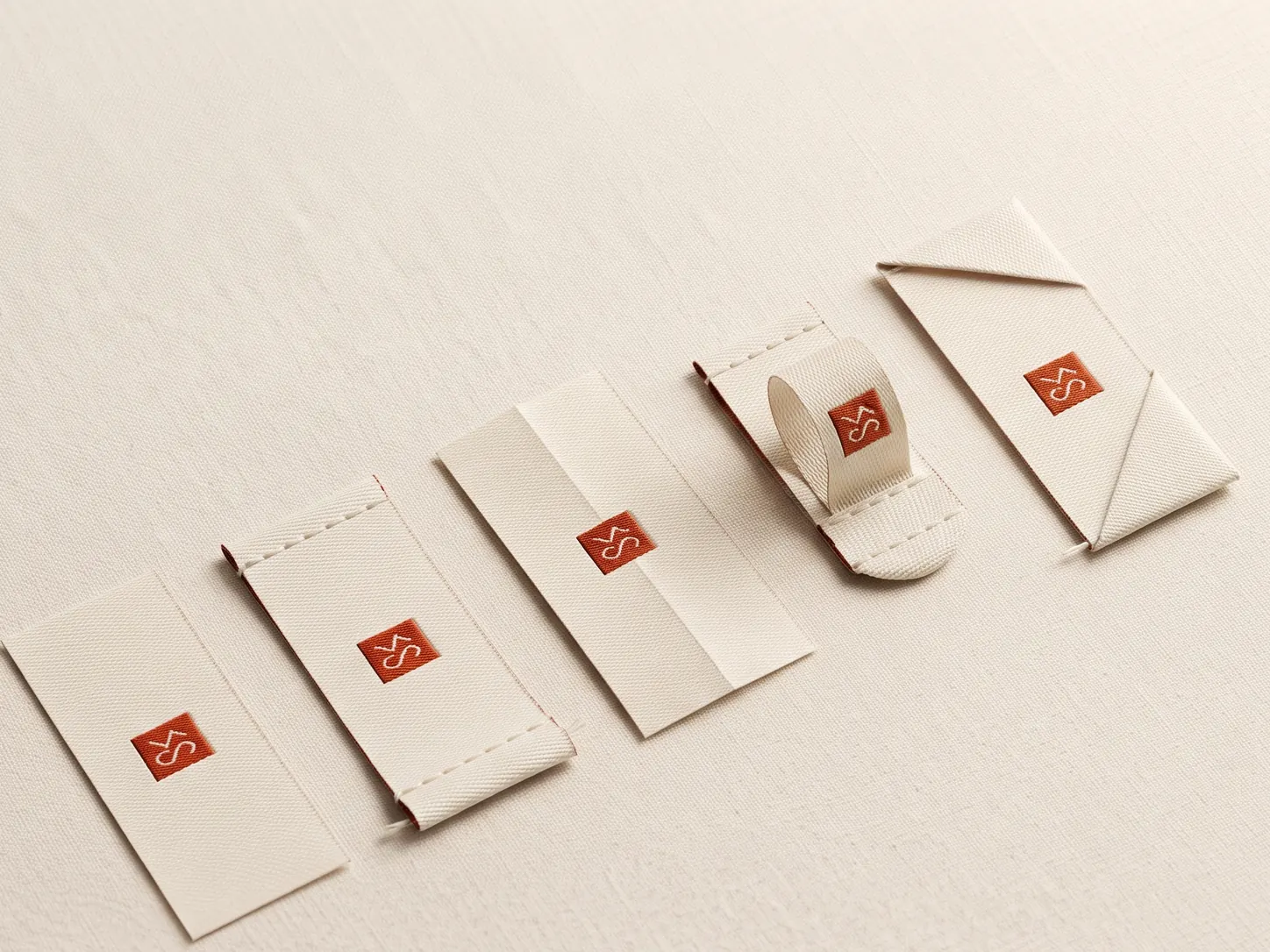
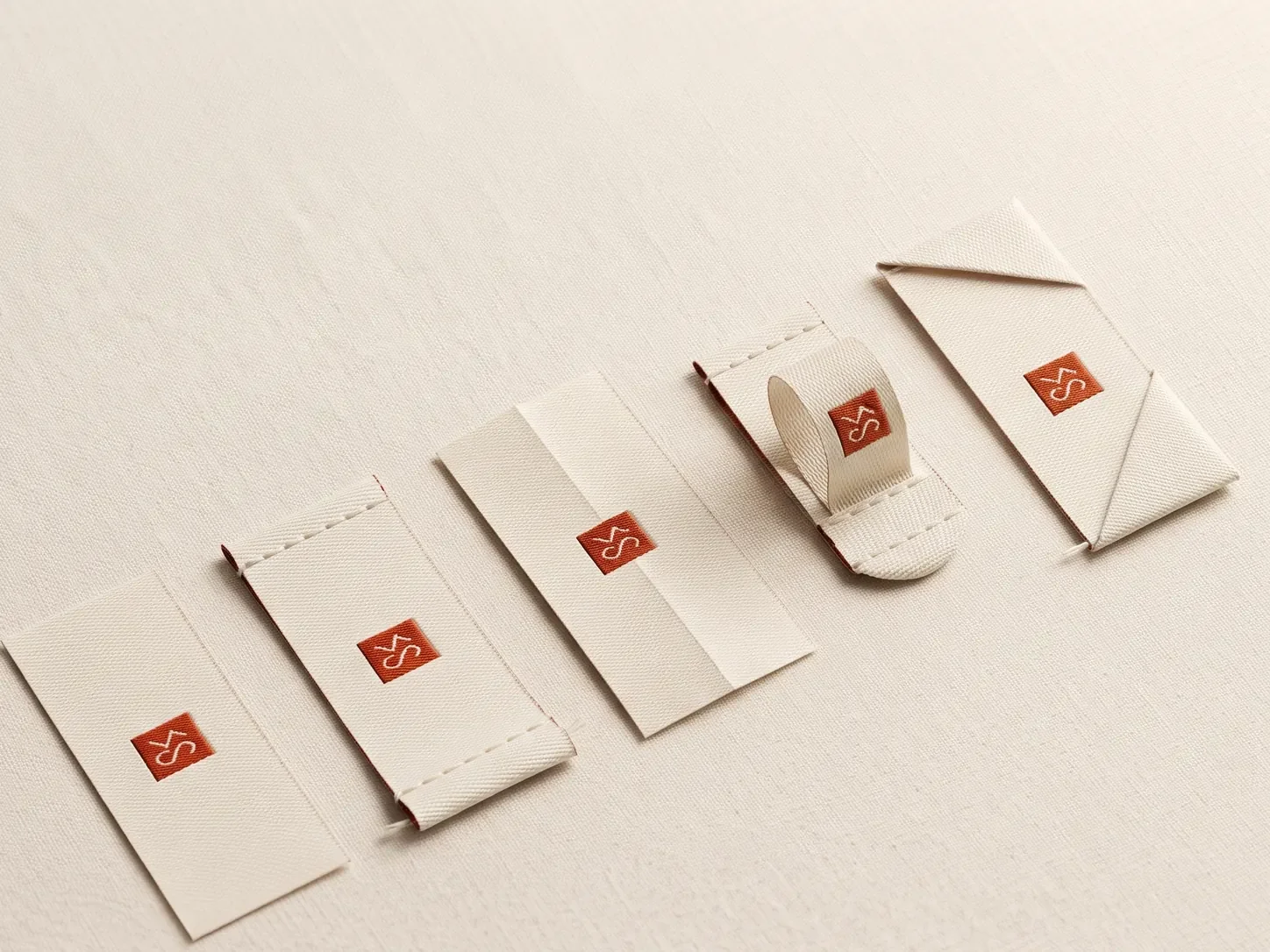
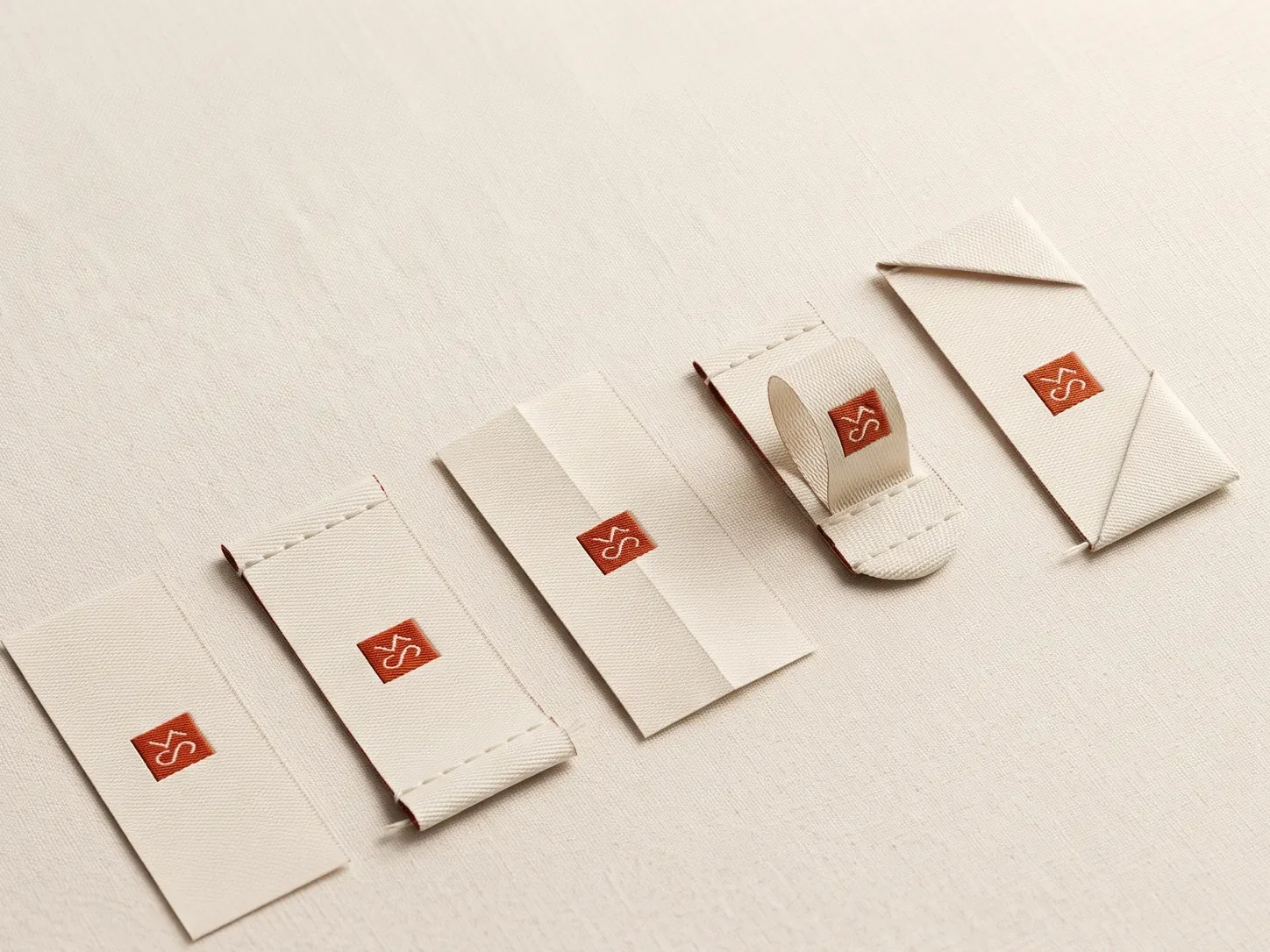
The outer panel acts like a cover while the inner panels hold additional information. The folds keep the label compact when sewn into the garment, but the customer can open it to read the complete label.
Labelwala has made folded woven and printed labels in Ahmedabad since 2000, quotes within 2 hours on a working day, and ships to more than 20 cities across India and more than 15 countries.
The Book Cover Fold Label is a specific label construction chosen for how its edges fold, how its panels sit and how it is attached to the garment. The fold changes the visible face, usable artwork area, sewing allowance and the way the label feels in the finished product. Fold allowances assume polyester satin or woven tape, which moves under 1% in a hot wash; untreated cotton tape can shrink 3 to 5%, so allow for it.
Two things are worth settling before anything else. The fold is dictated by how the garment is constructed, not by how the label looks, because a label meant to be caught in a seam is awkward to attach to a finished panel and the reverse is equally true. And the fold decides the flat size that actually has to be made, which is why it belongs in the quote rather than being treated as a finishing detail.
Defined fold
The fold line determines which edges or panels remain visible.
Made to brief
Unfolded size and allowance must be agreed before production.
Sample first
Sewn samples confirm the fold behaves correctly on the garment.
What is a Book Cover Fold label?
The outer panel acts like a cover while the inner panels hold additional information. The folds keep the label compact when sewn into the garment, but the customer can open it to read the complete label.
Preview this fold with your own artwork: the free label designer draws the flat piece, the turn-under and the visible face at true size, for every fold on this page.
How is the construction made?
The label is produced as a longer multi-panel strip with fold marks between each information area. The panels are folded inward in sequence, aligned like a small booklet and secured at the planned seam or attachment edge.
Brief the supplier clearly: name the fold, give the finished visible size, provide the unfolded size and mark every fold line in the artwork proof.
Where is it used?
- Care and composition information in premium garments
- Brand labels that also need size and fibre details
- Denim, jackets, ethnic wear and export-ready apparel
- Compact labels where several panels must remain together
Choose the fold by placement first. The right construction should support the seam, keep the label comfortable and make the intended face or panels easy to read.
Artwork and size planning
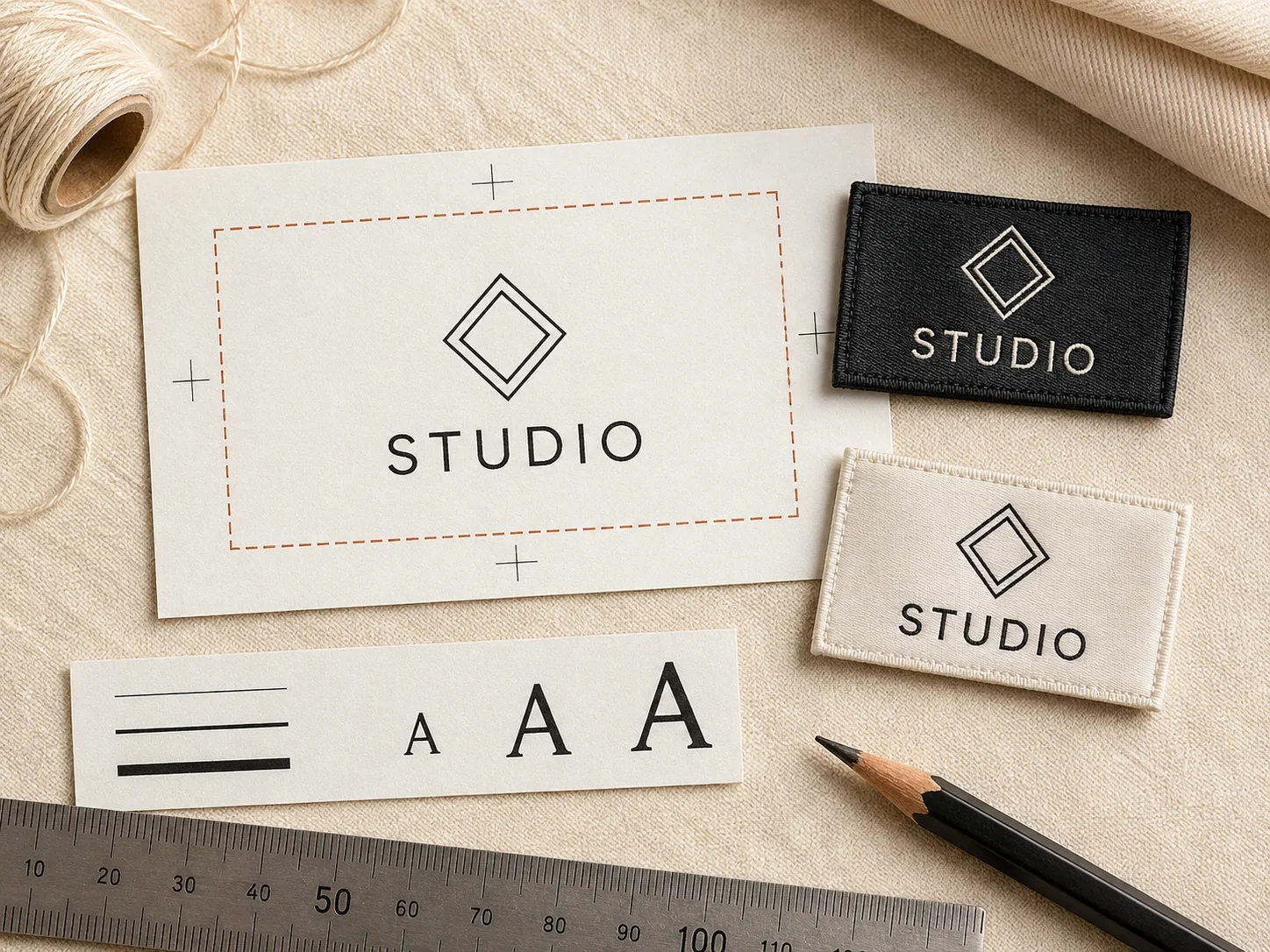
Design the cover first, then arrange the inside panels in reading order. Mark the fold lines, page order and safe areas. Keep fine type away from folds because the inner panels need to open and close without losing legibility.
Give the closed booklet size and the full unfolded strip size. Also provide the number of panels, panel widths, fold allowances and the amount that will be caught in the seam.
- Show the finished visible face or closed panel size.
- Show the full unfolded strip and every fold allowance.
- Mark safe areas, reading direction and the stitch or seam zone.
- Approve the artwork at actual size, then check a physical sample.
Sewing and sample approval
The folded booklet is normally inserted into a neck seam, side seam or label stack and stitched through the attachment allowance. A sample should be opened and closed repeatedly to confirm that the panels do not pull out or twist.
Check the sample on the actual garment, not only on a flat table. Look for a straight fold, even edges, comfortable contact, secure stitching and the correct artwork direction.
Which materials suit this fold?
Book cover folds are the most layered label construction in common use, and everything follows from that. Four, six or eight panels of the same cloth stack into something closer to a small booklet than a label, so the material has to be chosen for its behaviour in a stack rather than for how a single panel feels.
Light and supple is the rule, almost without exception. Fine printed satin is the standard for exactly this reason: it takes small type cleanly, folds without bulking, and stays flexible enough that the customer can open the label. Anything with body, damask, heavy taffeta, produces a booklet that will not lie flat and sits proud in the garment.
Print quality carries more weight here than in any other construction, because this label exists to hold text. Composition, care, origin, importer details and often two or three languages all have to be legible at small sizes, which is a printing problem rather than a folding one. Ask to see the smallest type on a physical sample, not on a screen proof.
- Fine printed satin: the standard. Light, supple, holds small type, folds into a thin booklet.
- Lightweight printed taffeta: economical, holds a crease well, slightly crisper hand.
- Printed cotton tape: only for short panel counts, and only where softness matters more than crease retention.
- Damask or heavy woven: avoid entirely. A multi-panel stack in damask will not close flat.
- Mixed materials across panels: avoid, different layers will relax at different rates and the booklet will splay.
Where does it sit on the garment?
Book cover folds exist for garments carrying a lot of mandatory information: export orders with multiple languages, technical products with detailed instructions, or ranges sold across markets with different labelling requirements. It is an information-carrying device first and a brand element second.
Because the closed label is thick, placement is dictated by where the garment can absorb it. A side seam is usually better than the neck. There is more room, the seam is longer, and the wearer is far less likely to feel it. Many brands put a simple brand tab at the neck and the book-cover label in the side seam, which plays to both constructions’ strengths.
The label has to be reachable and openable in the finished garment. If it is stitched into a seam so tightly that it cannot be lifted and turned, the inner panels are inaccessible and the information on them may as well not exist, which, where that information is required, is a compliance problem rather than an inconvenience.
Check how far the label protrudes when closed. A thick booklet caught in a side seam of a lightweight garment can show as a visible lump from the outside, particularly on fine or pale fabrics.
- Side seam, lower third: the usual position. Room for the bulk, and away from the skin at the neck.
- Inside a waistband: where the waistband construction gives something substantial to sew into.
- Pocket bag: on trousers and jackets, well protected and out of contact.
- Neck, only on structured garments with a facing that can take the thickness.
- Not on close-fitting or sheer garments, where the stack will show or be felt.
Working sizes
Give the closed size, the number of panels, the size of each panel, and the total unfolded length. On this construction the unfolded piece can be four or five times the closed length, so quoting the closed size alone tells the supplier almost nothing.
| Use | Finished face | Unfolded |
|---|---|---|
| Four panels, single language | 30 × 20 mm closed | 30 × 85-95 mm unfolded |
| Four panels, wider face | 40 × 25 mm closed | 40 × 105-115 mm unfolded |
| Six panels, two languages | 35 × 22 mm closed | 35 × 140-155 mm unfolded |
| Six panels, export multi-market | 40 × 25 mm closed | 40 × 160-175 mm unfolded |
| Eight panels, full compliance set | 40 × 25 mm closed | 40 × 215-235 mm unfolded |
What goes wrong with this fold?
- Quoting the closed size without the panel count, so the supplier cannot calculate anything.
- Choosing damask or a heavy woven, producing a booklet that will not close flat.
- Laying out the panels on a flat file without checking which way each one reads when opened.
- Stitching it in so tightly that the inner panels cannot be reached.
- Setting type so small that it fits the panel but cannot actually be read.
- Running text into the fold allowances, so a crease crosses a line of type.
- Putting a thick booklet at the neck of a lightweight garment.
- Approving it as a flat printed proof rather than a folded physical sample.
Panel sequence is the error that costs a whole run. On a flat file the panels sit in a row; folded, they interleave, and panel four may end up facing backwards or upside down. Ask for the proof to be shown folded, and read it in that state.
Legibility is the second, and it is a judgement no specification can make for you. Type that fits is not the same as type that reads, particularly after the label has been through a season of washing. Set the minimum size against a washed sample, not a fresh one.
What does it cost to make?
The material cost scales almost linearly with panel count, because every panel is a panel of cloth that has to be printed. A six-panel label at 25 mm per panel is a 150 mm piece before allowances, so it is genuinely a large label that happens to be folded small.
Folding is also the most demanding finishing operation of any construction here. Multiple accurate folds in sequence have to register correctly, and a small error compounds across the panels, so setup and checking take longer than for a single fold.
The offsetting saving is real, though: one book-cover label can replace three or four separate labels and the sewing operations that go with them. On a garment sold across several markets, it can also replace market-specific label sets with a single universal one, which simplifies inventory considerably.
How does it hold up in wear?
This construction protects information better than any other. The inner panels never touch the garment or the wearer, so the text on them is shielded from abrasion and stays legible for the life of the product. Where a garment has to carry compliance information for years, that is a genuine functional advantage rather than a cosmetic one.
The outer cover panel takes all the wear instead, which is worth remembering when deciding what goes on it. Brand artwork on the cover will age; the composition on panel three will not.
The failure to watch for is splaying, the booklet gradually opening in the garment until it catches on things. That is a crease-retention problem, so ask whether the folds are heat-set, and check a sample after several hot washes rather than one cold one. A label that has splayed is uncomfortable and looks careless even though nothing has actually broken.
Sample checklist
Approve this as a folded physical sample sewn into the garment, and then read every panel. It is a document as much as a label, and it has to work as one.
- Does every panel read the right way up when the label is opened?
- Are the panels in the sequence you intended?
- Is the closed size what you specified?
- Can the label be opened easily in the finished garment?
- Is the smallest type genuinely readable, on a washed sample?
- Does any text run into a fold?
- Does the closed booklet lie flat, or does it splay?
- Does it show as a lump from the outside of the garment?
- Is all mandatory information present and on an accessible panel?
- Do the folds still hold after several hot washes?
How do you brief it to a supplier?
A brief that works: Book cover fold labels, six panels, 35 × 22 mm finished closed size, 35 × 148 mm unfolded including fold allowances, fine printed satin, panel sequence and orientation as per attached folded proof, English and French, folds heat-set, sewn into the left side seam, 2,000 pieces.
The brief gives production the construction, the finished size, the hidden allowances and the placement, which is everything needed to quote and proof without a follow-up call.
Getting book cover fold labels made at Labelwala
We make woven and printed labels in Ahmedabad, Gujarat, and we have been doing it for 25 years. Fold constructions like this one are quoted from the finished size plus the hidden allowances, so the two numbers matter more than anything else you send.
- Minimum order: 1,000 pieces.
- Shipping: pan-India to 20+ cities and export orders to 15+ countries.
- Experience: making labels in Ahmedabad since 2000.
- Shrinkage: polyester satin and woven labels move under 1% in a hot wash; untreated cotton tape can shrink 3 to 5%.
- Quotes: we usually reply within 2 hours on a working day.
- Production: 7-10 days once artwork is approved. Rush jobs run 3-5 days.
- Delivery: nationwide within India, timed by destination and the size of the consignment.
If you are not certain the fold is right for your garment, send a photo of where the label will sit with a ruler beside it. That tells us more than a description, and we can say whether the construction will lie flat there before anything is made.
We are rated 5.0 on Google from 27 reviews. Ask for a sewn sample rather than a loose one. A fold only shows its real behaviour once it is in a seam.
When should you choose this fold?
Choose book cover fold when several panels need to stay compact like a booklet. Choose Manhattan fold for a smaller brand-plus-information arrangement. Choose centre fold for a simpler two-face label.
- Confirm where the label will be seen.
- Choose the face or panel arrangement.
- Share folded and unfolded measurements.
- Approve a sewn sample before bulk production.
Final recommendation
Book Cover Fold Label works when its fold matches the garment construction and the artwork respects the hidden allowances. If you are comparing all options, use the complete fold and finishing guide before requesting a quotation.